
Roofing Google Ads: The Proven Guide for Contractors
Roofing Google Ads: The Proven System for Roofing Contractors
The storm response campaign structure, seasonal bidding strategy, and ad copy system behind roofing Google Ads campaigns that win storm season — and generate leads year-round
Roofing Google Ads have a specific dynamic that sets them apart from every other trades vertical: demand is event-driven. When a hail storm hits a market, search volume for storm damage roof repair can spike 300-400% within hours. The roofing companies that capture that surge aren’t the ones scrambling to launch campaigns after the storm — they are the ones already running optimized campaigns that scale up immediately when the event arrives. As documented in our roofing local SEO guide, the map pack positions and the paid search campaigns that win storm season are built in the off-season, not during it.
I’m Duncan Lauder, President of Marketing Practicality, and I’ve managed roofing Google Ads and trades contractor campaigns for over 25 years. The campaign structure, storm response protocol, and compounding efficiency principles that produce consistent leads for roofing contractors — in storm season and off-season alike — are the subject of this post. The data anchor comes from an 11-year trades campaign that demonstrates exactly what consistent optimization produces over time.

Table of Contents
- Why Roofing Google Ads Work Differently
- Roofing Google Ads Campaign Structure
- Roofing Google Ads Storm Response Strategy
- Roofing Google Ads Ad Copy That Converts
- Roofing Google Ads Landing Pages
- Roofing Google Ads Negative Keywords
- Roofing Google Ads Seasonal Strategy
- Roofing Google Ads and the Compounding Effect
- Roofing Google Ads Bidding Strategy
- Roofing Google Ads Implementation Roadmap
- Frequently Asked Questions
Why Roofing Google Ads Work Differently
Roofing Google Ads serve two fundamentally different audiences. The first is the storm damage audience — a homeowner who just had a hail event, wind damage, or a tree fall on their roof and needs immediate assessment and repair. The second is the planned replacement audience — a homeowner whose roof is aging, whose insurance company flagged it, or who is preparing their home for sale and needs a new roof. These two audiences have different urgency levels, different decision timelines, and different conversion triggers. Running a single catch-all “roofing contractor” campaign for both consistently underperforms segmented campaigns built for each intent.
The Storm Damage Roofing Google Ads Audience
Storm damage searches spike within hours of a weather event and decay almost as fast. A homeowner who had hail damage yesterday is searching today. By next week, the urgency has passed — they’ve either called a contractor or decided to wait. Consequently, storm damage roofing Google Ads campaigns need to be running and optimized before the storm, then scaled immediately when it arrives. A campaign launched in response to a storm is too late.
Furthermore, the storm damage audience converts on specific signals that the replacement audience doesn’t care about. Insurance claim assistance — “We Work With Your Insurance” — is a powerful conversion signal for storm damage searchers who are anxious about the claims process. Inspection offers — “Free Storm Damage Inspection” — lower the barrier to first contact for homeowners who aren’t sure whether they have damage. Neither of these signals matters much to a homeowner researching planned replacement.
The Planned Replacement Roofing Google Ads Audience
Planned replacement searches come from homeowners who are researching a $10,000–$20,000+ decision. They are comparing contractors, reading reviews, evaluating manufacturer certifications, and considering financing options. As a result, planned replacement roofing Google Ads campaigns need content-rich landing pages, financing information, manufacturer certification signals (GAF, CertainTeed, Owens Corning), and trust-building elements that help a homeowner feel confident committing to a high-ticket project. Urgency messaging that converts storm damage searchers is largely irrelevant to this audience.
Roofing Google Ads vs. local SEO:
This post focuses entirely on paid search. For the complementary local SEO strategy — Google Business Profile optimization, storm damage content pages, and map pack rankings — see our roofing local SEO guide and roofing digital marketing strategy guide. For a complete audit, use the free roofing digital marketing checklist. Running both channels together consistently outperforms either alone.
Roofing Google Ads Campaign Structure
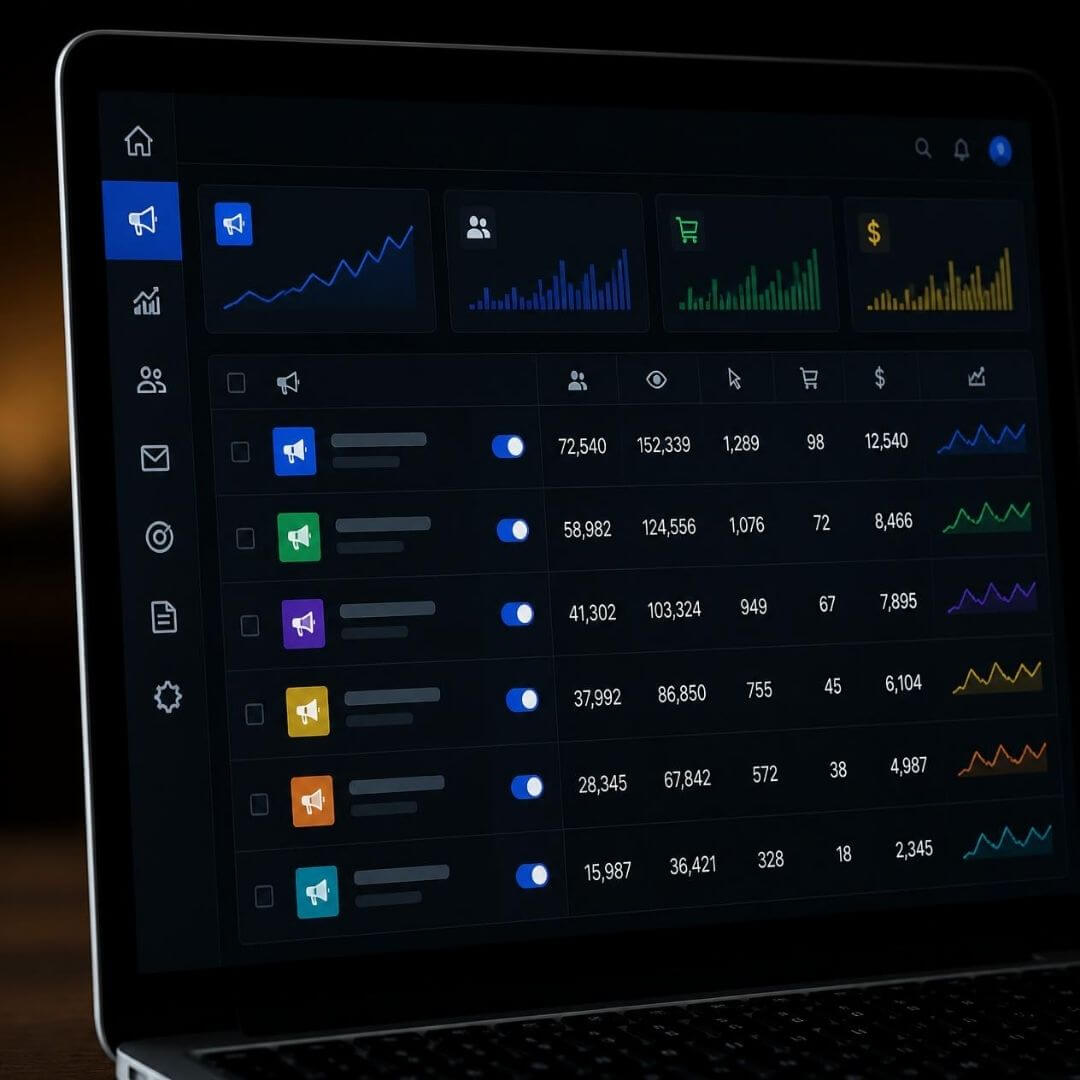
The most important structural decision in roofing Google Ads is separating storm damage and replacement into distinct campaigns. One broad “roofing contractor” campaign competes for everything and converts on too little. Separate campaigns by intent type — each with its own keywords, ad copy, budget allocation, and landing page — consistently outperform catch-all campaigns in both Quality Score and conversion rate.
Roofing Google Ads Storm Damage Campaign
The storm damage campaign is the highest-urgency, highest-conversion campaign in the roofing portfolio. It runs year-round at a baseline budget and scales aggressively when weather events occur. The storm damage campaign includes:
- Storm damage repair ad group — “storm damage roof repair [city],” “roof damage repair near me,” “storm damage roofing contractor [county]”
- Hail damage ad group — “hail damage roof repair [city],” “hail damage roofing contractor,” “hail damage roof inspection” — the most common insurance claim trigger in roofing
- Wind damage ad group — “wind damage roof repair [city],” “roof blown off repair near me,” “missing shingles repair”
- Free inspection ad group — “free roof inspection after storm [city],” “storm damage roof inspection near me” — a low-barrier entry point that converts homeowners unsure whether they have damage
- Emergency tarping ad group — “emergency roof tarping [city],” “emergency roof repair near me” — the highest-urgency subset, typically post-major-storm
Roofing Google Ads Replacement Campaign
The replacement campaign targets homeowners researching a full roof replacement — the highest-ticket roofing service. It requires different copy, different landing pages, and a longer consideration timeline than the storm damage campaign. The replacement campaign includes:
- Roof replacement ad group — “roof replacement [city],” “new roof installation [county],” “roofing contractor near me”
- Roof replacement cost ad group — “roof replacement cost [city],” “how much does a new roof cost” — research-phase keywords from homeowners budgeting before committing
- Shingle replacement ad group — “shingle replacement [city],” “asphalt shingle roof replacement near me”
Roofing Google Ads Inspection Campaign
Roof inspection is a distinct service type — lower ticket, but a strong entry point for both storm damage claims and planned replacement leads. The inspection campaign captures homeowners preparing for a home sale, responding to an insurance renewal inspection requirement, or simply aging their roof and wondering about its condition.
- “Roof inspection [city],” “roof inspection near me [county],” “pre-sale roof inspection [city]”
- “Roof inspection cost [city]” — research-phase keyword from homeowners evaluating whether to get an inspection
Roofing Google Ads Commercial Campaign
Commercial roofing is an entirely different audience — property managers, building owners, and facility managers — with different decision timelines, different budget authorities, and different keyword patterns. If your firm serves commercial customers, a separate commercial roofing campaign with its own keywords, copy, and landing page consistently outperforms mixing commercial and residential in the same campaign.
Roofing Google Ads Storm Response Strategy
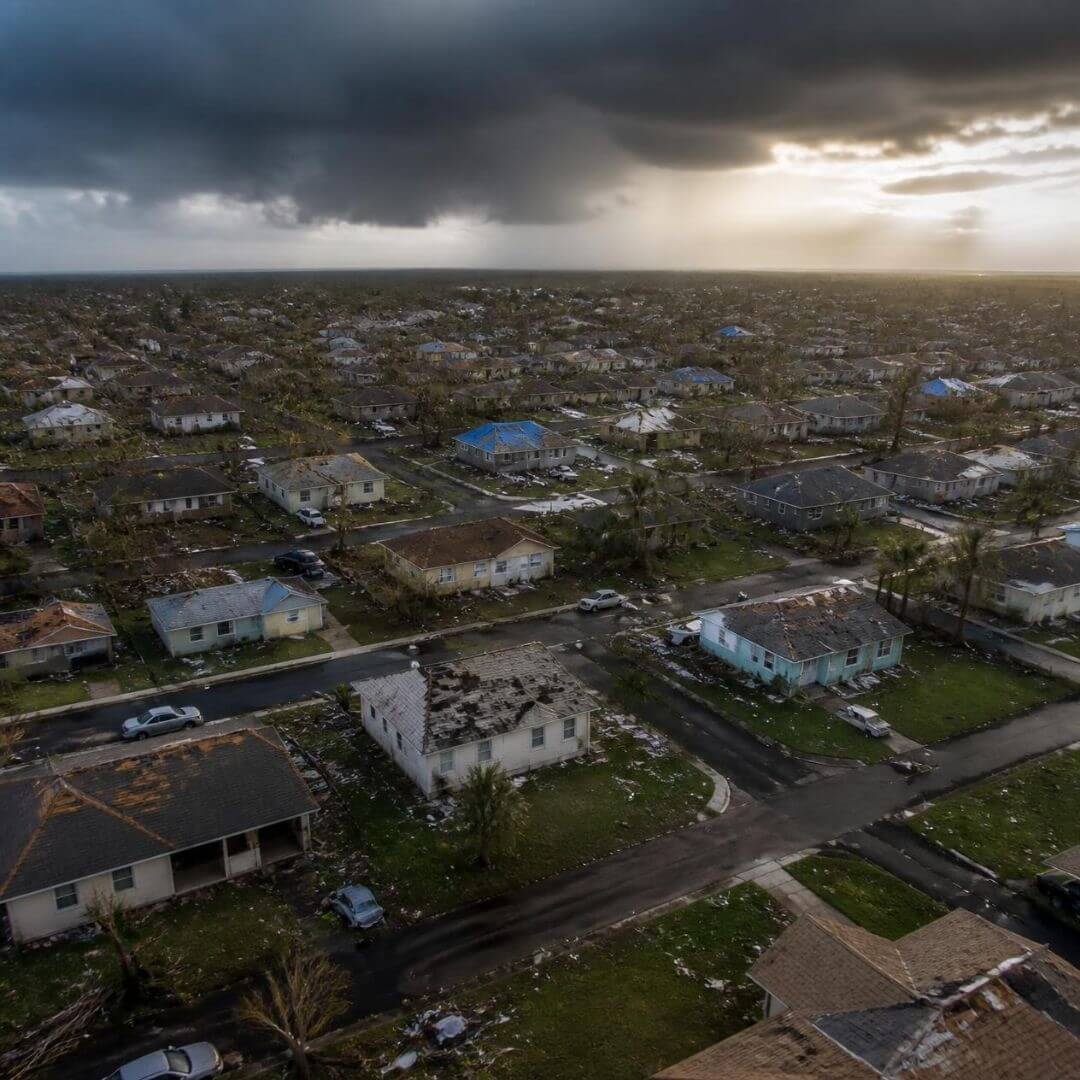
Storm response is the most time-sensitive element of roofing Google Ads. When a significant weather event hits your market, the window for capturing storm damage leads is short — typically 48-72 hours of peak urgency before search volume starts declining. The roofing companies that capture the most leads during that window have a documented storm response protocol ready to execute immediately.
Roofing Google Ads Storm Response Protocol
A documented storm response protocol for roofing Google Ads covers four actions that should be completed within 24 hours of a significant weather event:
- Storm damage campaign budget increase — scale the storm damage campaign budget by 2-3x immediately. The surge in search volume requires proportionally higher spend to maintain ad position against competitors doing the same thing. A campaign that holds position at 10x normal search volume captures 10x the leads — a campaign that gets outbid captures none.
- Ad copy updated to name the specific event — “Hail Damage from [City] Storm? Free Inspection Today” outperforms generic storm damage copy because it confirms to the searcher that you are responding to their specific event. When possible, reference the date or location of the storm in the ad copy.
- Geographic bid adjustments activated — increase bids specifically for the zip codes and cities affected by the storm. Not all of your service area was affected equally. Concentrating spend in the affected geography maximizes efficiency during the peak urgency window.
- Landing page updated with storm-specific content — add a banner or headline referencing the specific storm event. “Serving [City] homeowners affected by the July 15th hail storm” is a relevance signal that converts homeowners who are searching specifically because of that event.
Pre-Storm Roofing Google Ads Preparation
Storm response protocol only works if the campaign infrastructure is already in place. Specifically, the roofing company that builds and optimizes its storm damage campaign in February captures the June storm surge more efficiently than the one building a campaign in response to the storm. Pre-storm preparation includes:
- Storm damage ad groups built, tested, and running at baseline before storm season
- Storm-specific landing pages live and indexed — free inspection offer, insurance claim assistance, emergency availability signal
- Ad copy variations pre-written for different storm types — hail, wind, and general storm damage
- Geographic bid adjustment templates ready to activate for specific cities and counties
- Budget increase protocol documented — who approves the increase and what the escalation looks like
Roofing Google Ads Ad Copy That Converts
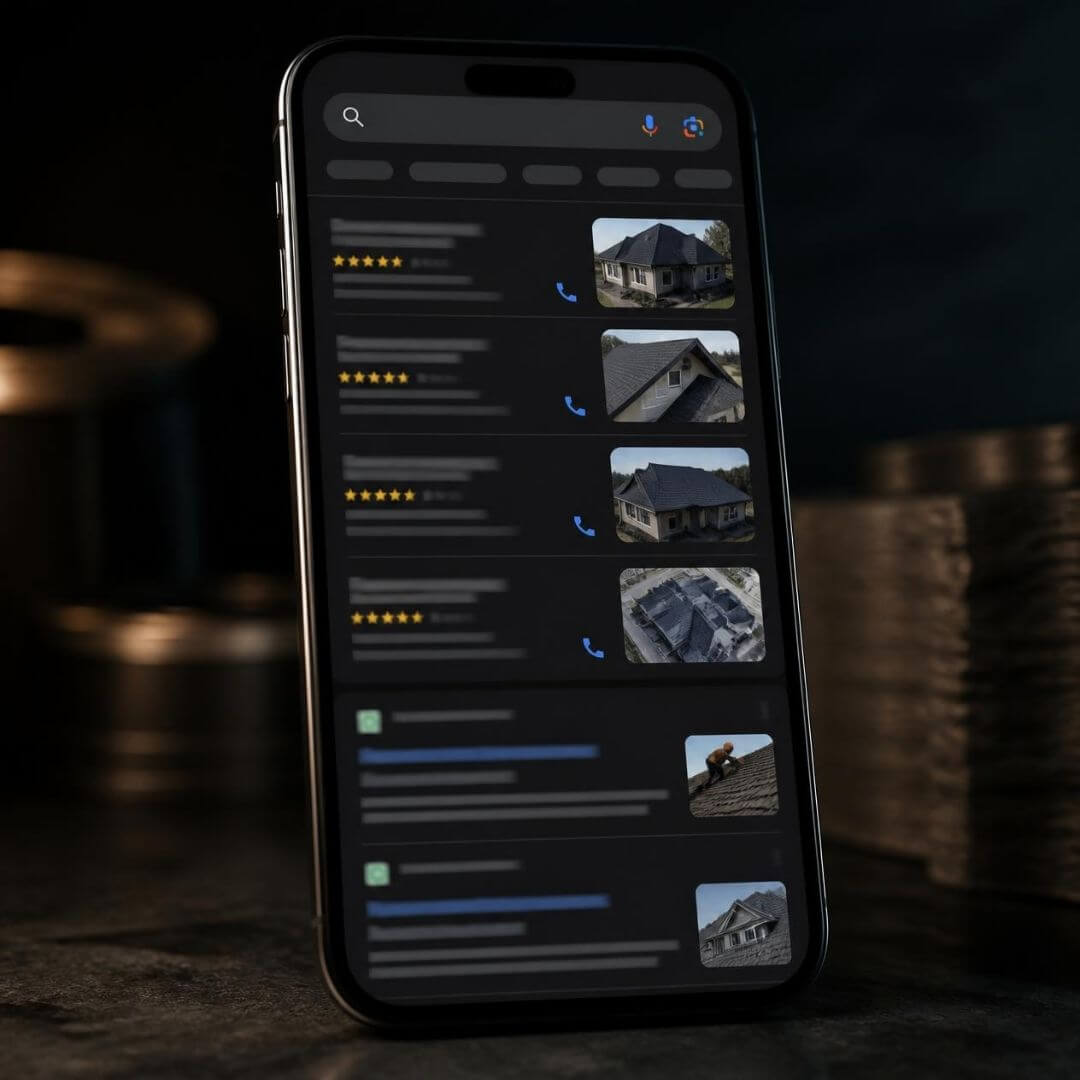
Effective roofing Google Ads copy follows the same principle as all trades advertising: match the emotional state of the searcher, not the credentials of the contractor. A homeowner who just had hail damage is anxious about their insurance claim and their home’s condition. They are not evaluating years of experience — they are looking for someone who can come today, document the damage, and handle the insurance process.
Roofing Google Ads Storm Damage Copy
Roofing Google Ads Replacement Copy
Roofing Google Ads Insurance Claim Copy
“We Work With Your Insurance” is one of the highest-converting claims in storm damage roofing Google Ads. The insurance claim process is the primary anxiety point for homeowners dealing with storm damage — they are often unfamiliar with the process and worried about being shortchanged by their insurer. A roofing contractor who positions themselves as a guide through the claims process, not just a repair contractor, converts this audience at significantly higher rates.
Roofing Google Ads Ad Extension Strategy
- Call extensions — essential for storm damage campaigns. A homeowner assessing roof damage wants to call immediately, not fill out a form. A call extension connecting directly to a dispatcher during business hours — and an after-hours line during storm events — captures the highest-urgency leads.
- Sitelink extensions — link to service-specific pages: Storm Damage Inspection, Roof Replacement, Insurance Claims, Financing. Sitelinks allow the prospect to self-select the most relevant service and improve overall ad footprint.
- Callout extensions — “GAF Certified,” “Free Storm Inspection,” “We Work With Insurance,” “Financing Available,” “Licensed and Insured” — these conversion signals add to every ad without consuming headline space.
- Promotion extensions — seasonal inspection specials and financing offers can be promoted directly in the ad during the October pre-winter inspection window and the spring replacement season.
Roofing Google Ads Landing Pages
Landing pages are where roofing Google Ads campaigns convert — or fail to. Storm damage landing pages and replacement landing pages have completely different jobs and should be built accordingly. A homeowner who clicked a storm damage ad and landed on a generic “roofing services” page feels an immediate mismatch. They leave. A homeowner who clicked a storm damage ad and landed on a page that says “Free Storm Damage Inspection — We Work With Your Insurance” converts.
Roofing Google Ads Storm Damage Landing Pages
- H1 that matches the specific storm type — “Hail Damage Roof Inspection [City]” or “Storm Damage Roof Repair [City]” — not generic “roofing contractor”
- Free inspection offer prominent above the fold — the zero-risk offer is the primary conversion element for storm damage searchers who aren’t sure whether they have damage
- Insurance claim assistance signal — “We work with all major insurance companies” reduces the primary anxiety of the storm damage audience
- Tap-to-call phone number above the fold — a homeowner assessing storm damage wants to call, not fill out a form
- Before-and-after photos from actual local storm jobs — visual proof of damage documentation and repair converts better than stock imagery
- Simple contact form — three fields maximum — name, phone number, and address for the inspection. Every additional field reduces completion rate
- No navigation menu — eliminate every exit path that isn’t a call or a form submission
Roofing Google Ads Replacement Landing Pages
Replacement landing pages serve a longer decision timeline and a higher-ticket purchase. In addition to the basics — prominent phone number, simple contact form — replacement pages should include financing information prominently, manufacturer certification logos (GAF, CertainTeed, Owens Corning), warranty details, and real customer reviews that build trust for a $10,000–$20,000+ commitment.
Roofing Google Ads Negative Keywords
Negative keyword management is a significant ongoing optimization in roofing Google Ads. Roofing keywords overlap with a wide range of non-converting searches — DIY content, materials searches, career searches, and non-residential intent. Review the search terms report monthly and add negatives consistently.
Roofing Google Ads Negative Keyword Categories
DIY and Self-Help:
- “How to repair a roof,” “DIY roof repair,” “roof repair yourself,” “how to install shingles,” “flat roof repair DIY”
Materials and Supplies Only:
- “Roofing shingles,” “roofing materials,” “roofing supplies near me,” “metal roofing panels,” “roof tiles price”
Career and Education:
- “Roofing jobs,” “roofing apprenticeship,” “how to become a roofer,” “roofing contractor license,” “roofing salary”
Non-Residential or Out-of-Scope:
- “Commercial roofing” — add as negative to residential campaigns if you don’t serve commercial; remove if you do
- “Flat roof” — if you don’t do flat roofing, add as negative to avoid irrelevant clicks
Insurance Research (Non-Converting):
- “Does insurance cover roof replacement,” “roof insurance claim process” — research intent, not buying intent; better served by content than ads
Roofing Google Ads Seasonal Strategy
Roofing has the most pronounced seasonal demand pattern of any trades vertical — storm season and replacement season create dramatic swings in search volume that require proactive campaign adjustment throughout the year. The roofing Google Ads seasonal strategy anticipates these swings and adjusts before they arrive.
Roofing Google Ads Spring Strategy (March–May)
Spring is the first peak of the roofing year. Post-winter inspections, spring storm damage from hail and wind events, and the beginning of planned replacement season all converge. As a result, the storm damage campaign should be at full budget before the first spring storm arrives — not launched in response to it. Additionally, replacement campaigns should be elevated in April and May as homeowners begin home improvement planning for the year.
Roofing Google Ads Summer Strategy (June–August)
Summer is peak storm season in most markets. Hail events, severe thunderstorms, and hurricane-related wind damage produce the highest lead volume of the year. Consequently, summer requires the highest annual budget allocation for storm damage campaigns. Furthermore, the storm response protocol should be on standby throughout storm season — ready to activate within hours of a significant weather event.
Roofing Google Ads Fall Strategy (September–November)
Fall is the October inspection window — one of the most consistent and underexploited opportunities in roofing Google Ads. Homeowners preparing for winter search for roof inspections in September and October at higher rates than any other planned service period. Moreover, replacement campaigns remain strong through October as homeowners try to complete projects before winter. Building and optimizing fall campaigns in August allows them to be fully effective when the October surge arrives.
Roofing Google Ads Winter Strategy (December–February)
Winter brings ice dam damage, emergency repair needs from storm accumulation, and the beginning of spring replacement research. Rather than pausing campaigns, the winter strategy maintains storm damage and replacement campaigns at reduced budgets while building the account learning and Quality Score that make spring storm season more efficient. The roofing company that maintained consistent activity through February holds better position in April than the one that paused and restarted.
Roofing Google Ads and the Compounding Effect

The most important long-term principle in roofing Google Ads is compounding efficiency. A campaign managed consistently for three years is dramatically more efficient than the same campaign in year one — not because the market changed, but because the account has accumulated Quality Score history, negative keyword lists, conversion data, and audience signals that make every dollar spent more effective.
The following data comes from an 11-year Google Ads campaign we manage for a multi-generational regional trades contractor serving Pennsylvania, Delaware, New Jersey, and Maryland. While the vertical is distinct from roofing, the campaign optimization principles — service type segmentation, year-round management, storm event response, and conversion rate compounding — apply directly to roofing Google Ads.
Roofing Google Ads Compounding: Year-by-Year Conversion Data
| Year | Total Conversions | Notes |
|---|---|---|
| 2015 | 70 | Campaign launch |
| 2016 | 201 | +187% YoY |
| 2017 | 188 | Campaign restructure |
| 2018 | 160 | Optimization period |
| 2019 | 105 | Market softening |
| 2020 | 81 | COVID impact — campaign maintained |
| 2021 | 294 | Post-COVID surge |
| 2022 | 300 | Peak volume |
| 2023 | 310 | Highest year |
| 2024 | 254 | Consistent performance |
| 2025 | 305 | Strong year-round performance |
| All-time | 2,395 | $23.28 avg CPL, 9.24% CVR |
Search campaigns only. All-time data: 25,909 clicks, $55,748 total spend. 2026 data partial through September 17, 2026.
What the Trades Data Shows About Roofing Google Ads
Three patterns in this data apply directly to roofing Google Ads management. First, the 2019-2020 dip reflects market conditions — and the decision to maintain the campaign through it, rather than pausing, is what enabled the dramatic 2021 surge. For roofing specifically, this is the storm season parallel: a campaign that maintains activity through a mild storm year holds Quality Score and account learning that makes the next major storm event dramatically more efficient to capture.
Second, the 2021-2023 surge to 294-310 conversions per year didn’t come from a budget increase alone. Rather, it came from accumulated optimization — Quality Score built over five years, negative keyword lists refined through hundreds of search term reviews, bid strategy algorithms trained on thousands of conversions. The same compounding is available to any roofing campaign managed consistently over time.
Third, the all-time $23.28 CPL wasn’t achievable at launch. It became achievable through consistent management applied year after year. Consequently, the roofing companies that treat Google Ads as a long-term compounding asset — not a seasonal switch — produce results that look dramatic over a 3-5 year horizon.
Average cost per lead across an 11-year trades Google Ads campaign — 2,395 conversions at 9.24% conversion rate. The compounding efficiency documented in this campaign applies directly to roofing: year-round management, storm event scaling, and consistent optimization produce results that no seasonal campaign can replicate. Full case study →
Roofing Google Ads Bidding Strategy
The right roofing Google Ads bidding strategy changes as the account matures — and makes specific allowances for the storm season demand spikes that are unique to this vertical.
Early Stage: Manual CPC for Roofing Google Ads
New roofing campaigns should start with manual CPC bidding. This gives direct control over position and spend while the account builds the conversion data that machine learning requires. Target top-of-page position for storm damage keywords — these are the highest-value clicks in the portfolio. Allow lower positions for replacement and inspection keywords while the account learns.
Storm Season Bid Adjustments for Roofing Google Ads
Even in mature campaigns running on automated bidding, storm season requires manual bid adjustment layering. Specifically, increase bids by 30-50% for storm damage keywords during active storm events in your service area. Search volume spikes during weather events and the leads generated are the highest-intent of the entire year. The automated algorithm may not respond fast enough to the volume change — manual bid adjustment layers ensure you maintain position during the peak urgency window.
Mid Stage: Target CPA for Roofing Google Ads
Once the campaign generates at least 30 conversions per month consistently, Target CPA bidding becomes viable. Set the initial target CPA at 20-30% above actual current CPL and tighten over time. For roofing, set storm damage and replacement campaigns to different target CPAs — storm damage leads convert at higher rates and warrant more aggressive bidding than replacement leads.
Mature Stage: Maximize Conversions for Roofing Google Ads
A mature roofing Google Ads account runs most efficiently on Maximize Conversions with a target CPA constraint — with manual bid adjustment layers added during storm events. The algorithm handles the year-round baseline efficiently. Storm events require the manual override because the demand spike is faster than automated learning can accommodate.
Roofing Google Ads Implementation Roadmap
Phase 1: Roofing Google Ads Campaign Build (Month 1–2)
- Keyword research by intent type — storm damage, replacement, inspection, insurance claim, commercial
- Campaign structure build — separate campaigns for storm damage and replacement at minimum
- Ad copy development — urgency-first for storm damage, financing-first for replacement, inspection offer for inspection
- Landing page audit or build — storm damage and replacement pages built separately with service-specific content
- Conversion tracking setup — calls, form fills, and chat by source and campaign
- Negative keyword seed list from categories above
- Storm response protocol documented — budget increase, ad copy update, geographic bid adjustment
- Manual CPC bidding with target top-of-page for storm damage keywords
Phase 2: Roofing Google Ads Optimization (Month 2–6)
- Monthly search terms report review — add negative keywords, identify new ad group opportunities
- A/B testing of ad headlines — insurance signal vs. urgency, financing vs. certification
- Landing page conversion tracking — identify pages underperforming vs. campaign average
- Geographic bid adjustments — increase bids in highest-converting zip codes
- Storm event response protocol tested — execute at least one storm response before peak season
- Transition to Target CPA once 30+ monthly conversions achieved
Phase 3: Roofing Google Ads Seasonal Scaling (Month 6–12+)
- Spring storm season — storm damage campaign at full budget before March
- Summer peak — storm response protocol on standby, budget at annual maximum
- October inspection window — inspection campaign elevated in September
- Winter maintenance — campaigns maintained at reduced budget year-round
- Annual campaign audit — full restructure if conversion rate improvement has plateaued
- Commercial roofing campaign added if applicable
- Local SEO integration — align roofing Google Ads and GBP strategy for maximum local visibility
Frequently Asked Questions About Roofing Google Ads
How much should a roofing company spend on Google Ads?
In competitive markets, a meaningful roofing Google Ads campaign requires $3,000–$6,000 per month during storm season. In slower seasons, $1,500–$3,000 per month maintains Quality Score and account learning. A well-optimized roofing Google Ads campaign should target $40–$80 per lead in most markets. Running separate campaigns for storm damage and replacement allows precise budget allocation by service type.
What is a good conversion rate for roofing Google Ads?
A well-optimized roofing Google Ads campaign should target 8–15% conversion rate. Storm damage keywords typically convert at higher rates than replacement keywords. Early-stage campaigns often run at 3–5% and improve significantly as negative keywords are added, ad copy is refined, and landing pages are built for specific intent types rather than generic roofing services.
Should roofing companies run Google Ads year-round or only during storm season?
Year-round, with budget and messaging adjusted by season. Campaigns that pause during the off-season lose Quality Score history and account learning that takes months to rebuild. The roofing company that maintained consistent activity through winter holds better position in spring storm season than the one that paused and restarted. The compounding is only available to campaigns that run consistently.
How do you structure Google Ads campaigns for a roofing company?
Separate campaigns by intent type: storm damage repair (activated and scaled during weather events), roof replacement (higher ticket, financing messaging), roof inspection (strong for the October pre-winter window), and commercial roofing (separate audience entirely). Each campaign should have its own keywords, ad copy, and landing page matched to the specific intent of the searcher.
What ad copy works best for roofing Google Ads?
Urgency and insurance signals for storm damage — “Storm Damage? Free Inspection Today — We Work With Your Insurance” converts better than generic contractor messaging. Financing and certification signals for replacement — “New Roof — Financing Available — GAF Certified” removes the primary conversion barriers for a $10,000–$20,000+ decision. Match the copy to the specific intent type — storm damage and replacement audiences respond to completely different messages.
What Marketing Practicality delivers for roofing Google Ads:
- Campaign structure built around storm damage and replacement segmentation from day one
- Storm response protocol — budget increase, ad copy update, and geographic bid adjustment within 24 hours of a weather event
- Insurance claim assistance messaging integrated into storm damage campaigns
- Seasonal campaign infrastructure built before peak season — spring storm campaigns ready before March
- Monthly search terms review and negative keyword management
- Storm damage and replacement landing pages built separately with intent-specific content
- Transparent reporting: cost per lead by campaign type, conversion rate by season, year-over-year trajectory
Also see our free roofing digital marketing checklist — a 58-point audit covering Google Ads, local SEO, storm response strategy, and lead tracking.

The Storm Season Surge Goes to the Campaign That Was Already Running. Build It Before the Storm.
The roofing companies that dominate storm season lead generation aren’t launching campaigns after the first hail event. Rather, they are scaling campaigns that were already running — optimized, Quality Score intact, storm response protocol ready to execute. The surge belongs to whoever was already there.
The practical starting point is campaign structure. Build separate campaigns for storm damage and replacement. Give each one its own ad copy and landing page. Document your storm response protocol — budget increase, copy update, geographic bid adjustment — so it can be executed within hours of a weather event. Maintain both campaigns year-round at appropriate seasonal budgets. Optimize monthly.
The $23.28 CPL documented in 11 years of trades campaign management didn’t happen in year one. It happened through consistent management applied year after year — and the same trajectory is available to any roofing campaign willing to invest consistently over time.
Get a Free Roofing Google Ads Analysis
Share your current campaign details and we’ll show you exactly where your biggest efficiency opportunities are — campaign structure, storm response protocol, ad copy, and seasonal strategy.
Ready to build a roofing Google Ads system that wins storm season?
Get a free campaign audit — we’ll show you exactly where your current roofing campaign is losing efficiency and what a structured storm response system looks like.
Schedule Your Free Strategy SessionElectrical Contractor Marketing: The Proven Guide
Electrical Contractor Marketing: The Proven System for Growing Your Electrical Business Google Ads, local SEO, and the compounding system behind electrical contractor marketing that generates…
Roofing Google Ads: The Proven Guide for Contractors
Roofing Google Ads: The Proven System for Roofing Contractors The storm response campaign structure, seasonal bidding strategy, and ad copy system behind roofing Google Ads…
Plumbing Google Ads: The Proven Guide for Contractors
Plumbing Google Ads: The Proven System for Plumbing Contractors The campaign structure, emergency ad copy, and seasonal bidding strategy behind plumbing Google Ads campaigns that…