
Roofing Local SEO: The Proven Guide for Contractors
Roofing Local SEO: How to Dominate Your Market Year-Round
The Google Business Profile, storm response, and service page system that keeps roofing contractors ranking — and generating leads — in every season
Roofing local SEO has a specific challenge that separates it from every other trades vertical: demand is highly seasonal and highly event-driven. When a storm hits, search volume for roofing services in the affected area can spike 300-400% overnight. When the storm passes, it drops just as fast. The roofing companies that capture the surge are the ones already ranking in the map pack before the storm arrives — not the ones trying to build visibility after it.
I’m Duncan Lauder, President of Marketing Practicality, and I’ve managed digital marketing for roofing contractors for over 25 years. Roofing local SEO is built in the off-season and harvested in storm season. The map pack positions you hold in February are the ones that generate calls in June. This guide covers the complete system — Google Business Profile optimization, storm-specific content, service-type location pages, review generation, and the seasonal content calendar that builds year-round authority.
Table of Contents
- Why Roofing Local SEO Works Differently
- Roofing Local SEO: Google Business Profile Optimization
- Roofing Local SEO: Storm Response Content Strategy
- Roofing Local SEO: Service-Type Location Pages
- Roofing Local SEO: Review Generation
- Roofing Local SEO: The Year-Round Content Calendar
- Roofing Local SEO: NAP Consistency and Directory Strategy
- Roofing Local SEO: Insurance Claim Content
- Roofing Local SEO: Implementation Roadmap
- Frequently Asked Questions
Why Roofing Local SEO Works Differently
Roofing is one of the most intensely local trades verticals. A homeowner doesn’t search for a roofing contractor in another city. They search for whoever can inspect their roof today — particularly after a storm. That geographic specificity makes the Google map pack the most valuable piece of digital real estate a roofing company can occupy. Moreover, it makes the off-season the most important time to build that position.
Two types of roofing searches drive the majority of leads. The first is event-driven — storm damage searches that spike immediately after hail, wind, or severe weather events. The second is planned — roof replacement, inspection, and maintenance searches from homeowners researching a significant home improvement decision. Both are local. Both convert well. However, they require different content and different messaging to capture effectively.
Roofing local SEO vs. Google Ads:
This post focuses on local SEO and organic visibility. For the paid search strategy — storm response campaigns, replacement campaigns, and seasonal bid adjustments — see our roofing digital marketing strategy guide. Additionally, for a complete audit of your current roofing marketing, use the free roofing digital marketing checklist. Running both channels together consistently outperforms either alone.
Roofing Local SEO: Google Business Profile Optimization
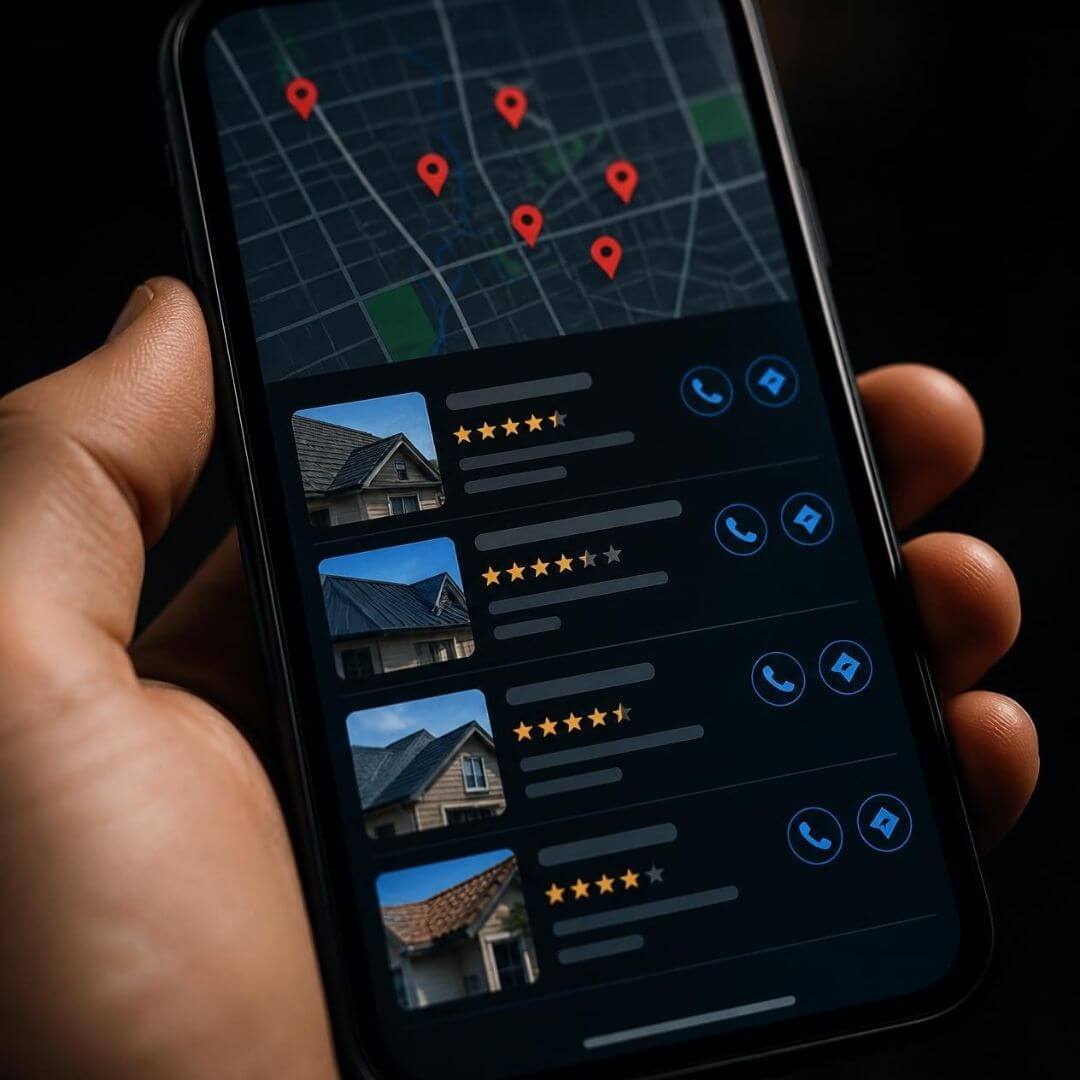
The Google Business Profile is the foundation of roofing local SEO. It controls map pack ranking, knowledge panel appearance, review display, and visibility in storm-related “near me” searches. Most roofing companies complete a basic profile setup and never return to it. By contrast, the companies consistently ranking in the top three map pack positions treat it as an active marketing asset — updated weekly, seasonally adjusted, and actively managed year-round.
Roofing Local SEO: Complete GBP Optimization
- Primary category — “Roofing Contractor” as the primary category. Add secondary categories where available — “Gutter Cleaning Service,” “Siding Contractor” — if those services are part of your offering.
- Services list — each service listed individually and specifically: roof replacement, storm damage repair, roof inspection, emergency tarping, gutter installation, gutter cleaning, commercial roofing, insurance claim assistance. The more specific the service list, the stronger the relevance signal for specific searches.
- Service area — every city, township, and county in your actual service footprint. Roofing searches are intensely local. Homeowners search from their location — not yours.
- Hours — complete and accurate. During storm season, if you offer emergency inspection availability, list it explicitly. “Available for storm damage inspections” is a conversion signal for a homeowner assessing roof damage after a weather event.
- Description — 750 characters covering your primary services, certifications (GAF, CertainTeed, Owens Corning), service area cities, and a storm response signal. Manufacturer certifications in the description reinforce both trust and keyword relevance.
- Photos — real job photos updated monthly. Before-and-after photos from actual local jobs consistently outperform stock roofing imagery for both rankings and conversion. Yard sign photos from local jobs also signal geographic activity.
Roofing Local SEO: Active GBP Management
A GBP that’s complete but static loses ground to one that shows consistent activity. Active management for roofing local SEO means:
- Weekly Google Posts — shift with the season. Storm damage content in peak storm season. Inspection and maintenance content in fall. Winter preparation content in November. Spring cleaning and inspection content in March. Each post is a freshness signal to Google’s local algorithm.
- Storm event posts within 24 hours — when severe weather hits your service area, post immediately: “Offering free storm damage inspections in [city] — call us today.” This hyper-timely content captures storm-related searches at peak urgency.
- Q&A section populated proactively — “Do you work with insurance companies?” “How quickly can you inspect after a storm?” “Do you offer financing for roof replacement?” Answer these before prospects ask. This content is indexed and appears directly in your profile.
- Respond to every review within 48 hours — positive and negative. Roofing has a high contractor fraud perception. A professional, prompt response to every review signals trustworthiness to every prospective customer who reads your profile.
Roofing Local SEO: Storm Response Content Strategy
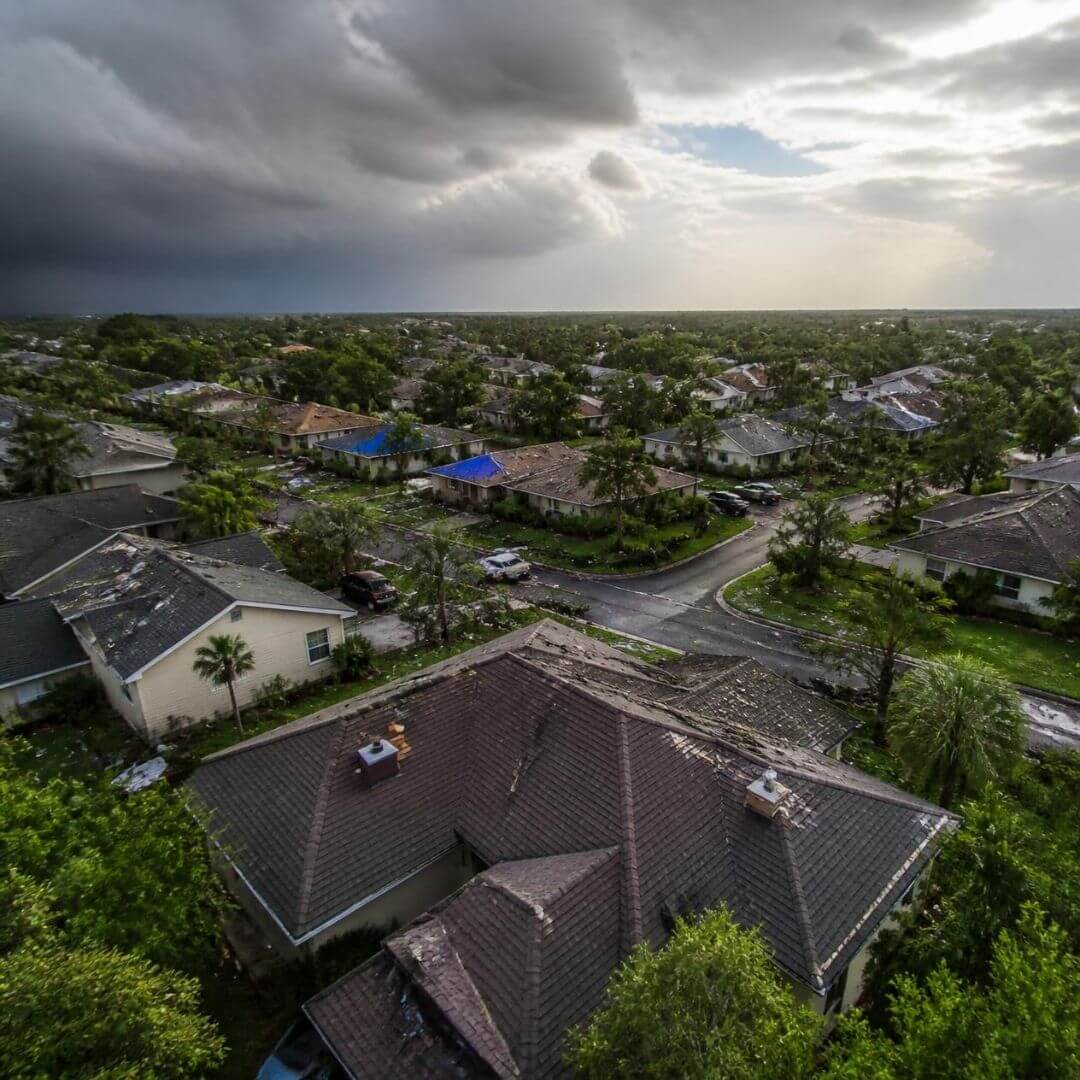
Storm response is the most time-sensitive element of roofing local SEO. When a hail storm hits a market, search volume for storm damage roof inspection and repair spikes within hours. The roofing companies that capture that traffic have content built and ranking before the storm — not after it.
Roofing Local SEO: Pre-Built Storm Content
Storm response content needs to be live and indexed before storm season arrives. Key pages to build in the off-season include:
- “Storm damage roof repair [city]” — the primary storm-season search term. This page should explain what to look for after a storm, what to do immediately, and how your inspection process works. Build it for each major city in your service area.
- “Free storm damage inspection [city]” — a low-barrier entry point that converts prospects who aren’t sure yet whether they have damage. Free inspection offers reduce the friction of first contact and start the relationship before the competitor quote.
- “Hail damage roof repair [city]” — hail is the most common storm damage trigger for roofing insurance claims. A dedicated page targeting hail damage searches captures a high-intent audience with specific insurance claim intent.
- “Emergency roof tarping [city]” — an immediate need after severe damage. This search has the highest urgency of any roofing keyword. Consequently, capturing it requires a page specifically dedicated to emergency tarping, with a prominent call-to-action and 24/7 availability signal.
Roofing Local SEO: Post-Storm Activation Protocol
When a significant weather event hits your service area, a documented local SEO response protocol maximizes your visibility window. Specifically, the protocol should include:
- GBP storm inspection post published within 24 hours of the event
- Blog content updated with the specific storm event and affected cities
- Google Ads storm damage campaigns activated at increased budget
- Social media posts targeting affected neighborhoods
The roofing companies that dominate post-storm lead capture aren’t doing anything complicated. They are simply executing a protocol they built in the off-season — consistently and immediately.
Roofing Local SEO: Service-Type Location Pages

The most underutilized roofing local SEO opportunity is service-type location pages. Most roofing companies have one “roofing contractor” page or a generic services page. That single page ranks poorly for the specific searches that produce the highest-value leads.
“Roof replacement [city]” and “storm damage roof repair [city]” are completely different searches from different homeowners. Their urgency differs. Their insurance involvement differs. Accordingly, the content they need to see before converting also differs. A dedicated page for each service type in each city consistently outperforms a single generic roofing page for both rankings and conversion rate.
Roofing Local SEO: Priority Service Pages
Roof Replacement Pages (by city/county):
- “Roof replacement [city]” — the highest-ticket roofing keyword. Target homeowners researching a full replacement with financing information, manufacturer certifications, and a detailed process explanation.
- “New roof installation [city]” — captures a distinct search from homeowners building or doing major renovations.
- “Roof replacement cost [city]” — a research-phase keyword from homeowners budgeting before they commit. This page should address cost factors honestly rather than avoiding the question.
Storm Damage Pages (by city/county):
- “Storm damage roof repair [city]” — the primary storm response keyword, as discussed above.
- “Hail damage roof repair [city]” — a sub-category of storm damage with specific insurance claim implications.
- “Wind damage roof repair [city]” — another high-intent storm damage search category.
Inspection and Maintenance Pages:
- “Roof inspection [city]” — captures homeowners seeking a professional assessment before buying, selling, or filing an insurance claim.
- “Roof repair [city]” — lower ticket than replacement but high volume and strong conversion rate.
- “Commercial roofing [city]” — a separate audience entirely, requiring its own page and messaging.
Roofing Local SEO: What Each Service Page Needs
- H1 that exactly matches the target keyword: “Roof Replacement Cherry Hill NJ”
- Opening paragraph acknowledging the homeowner’s specific situation and concerns
- Service-specific content — what the replacement process looks like, timeline, warranty
- Manufacturer certification logos — GAF, CertainTeed, Owens Corning certifications convert for planned replacement
- Financing information for replacement pages — roof replacement is a $10,000+ decision
- Insurance claim process explanation for storm damage pages
- Real local job photos — actual before-and-after from jobs in that city
- Tap-to-call phone number prominent above the fold
- Simple contact form — name, phone, service type, brief description
Roofing Local SEO: Review Generation

Google reviews are a direct roofing local SEO ranking signal and the primary trust factor for homeowners comparing contractors in the map pack. Roofing is a high-ticket, high-trust category — a homeowner comparing two map pack listings will read reviews carefully before calling. Furthermore, reviews mentioning specific terms like “storm damage,” “insurance claim,” and “fast response” support the exact search terms that drive roofing local SEO rankings.
Roofing Local SEO: A Systematic Review Generation Process
- Crew member verbal request at job completion — “We’d really appreciate a Google review if you’re happy with the work. It helps a lot.” This is the highest-converting step and the most consistently skipped in roofing.
- Automated SMS within 24-48 hours of job close — direct link to your Google review page, brief message: “Thank you for choosing [Company Name]. If you’re happy with the work, a quick Google review means a lot to us.” Keep it short. Include a single tap to the review link.
- Email follow-up 72 hours later for non-responders — one additional touchpoint. During storm season, when you’re completing multiple jobs per day, automation is the only way to maintain consistent review velocity.
- Respond to every review within 48 hours — positive and negative. In roofing, where contractor fraud is a genuine consumer concern, a professional response to a negative review demonstrates accountability and actually converts skeptical prospects.
Google reviews the most competitive roofing markets typically require for consistent map pack visibility. However, review velocity matters more than total count. A roofing company receiving 5-8 new reviews per month consistently will outrank one with a larger static count that stopped receiving new reviews six months ago. Build the process. Run it after every job.
Roofing Local SEO: The Year-Round Content Calendar
As covered in our roofing digital marketing strategy guide, the companies that dominate their roofing markets aren’t the ones with the best storm season. They’re the ones with the best off-season. The map pack positions you build in November are the ones you hold in June.
Spring (Mar–May)
- Post-winter inspection content
- Hail and wind damage content
- Insurance claim process guides
- Spring replacement content
- GBP posts about storm preparation
Summer (Jun–Aug)
- Storm damage response content
- Emergency tarping content active
- Insurance claim content peak
- GBP storm event posts
- Replacement before fall content
Fall (Sep–Nov)
- Pre-winter inspection content
- Gutter cleaning content
- Year-end replacement content
- GBP posts about winter prep
- Build spring storm content now
Winter (Dec–Feb)
- Ice dam content
- Emergency repair content
- Spring planning content
- GBP weekly posts continue
- Review generation continues
Roofing Local SEO: The 60-Day Content Rule
Content published for a specific season needs to be live at least 60 days before that season’s search volume peaks. Storm damage content published in March has time to build authority before June storm season. By contrast, content published in June starts from zero at exactly the moment when the demand is highest. The roofing companies ranking at the top of storm damage searches in June started publishing storm content in March — not after the first storm of the season.
Roofing Local SEO: NAP Consistency and Directory Strategy
NAP consistency — identical Name, Address, and Phone number across every platform — is a foundational roofing local SEO requirement. A single digit difference in a phone number or a street abbreviation inconsistency creates a signal conflict that suppresses map pack rankings. Run a NAP audit annually and fix every inconsistency.
Roofing Local SEO: Priority Directories
- Angi (formerly Angie’s List) — significant roofing-specific traffic and a direct lead source. Complete profile with storm damage and replacement listed as specific services.
- HomeAdvisor — homeowners cross-reference multiple platforms for high-ticket decisions like roof replacement. Maintain an active profile even if you don’t actively use the lead service.
- Houzz — growing authority for home improvement searches. Roofing profiles with real project photos perform particularly well.
- Better Business Bureau — especially important for roofing given contractor fraud concerns in the category. BBB accreditation is a visible trust signal that converts skeptical homeowners.
- Manufacturer contractor directories — GAF, CertainTeed, and Owens Corning all maintain directories of certified contractors. These carry both referral value and roofing local SEO citation value.
- Local chamber of commerce — local citation signal with strong geographic relevance for city-specific roofing searches.
- Yelp — high consumer traffic for home services. Complete profile with real job photos and all service types listed.
Roofing Local SEO: Insurance Claim Content
Insurance claim assistance is one of the most underutilized roofing local SEO content opportunities. When a homeowner files an insurance claim for storm damage, they search for guidance throughout the process — and the roofing company whose content answers those questions builds trust before a competitor ever makes contact.
Roofing Local SEO: High-Value Insurance Content Topics
- “How to file a roof insurance claim [state]” — a high-intent research search from homeowners starting the process
- “How to document roof damage for insurance” — practical guidance that positions your firm as a knowledgeable partner, not just a contractor
- “Does homeowner insurance cover roof replacement” — a research-phase question from homeowners evaluating their coverage
- “Working with insurance adjusters for roof damage” — content that reduces the anxiety homeowners feel about the process and establishes your expertise
- “Insurance claim denied for roof damage — what to do” — captures a high-frustration, high-urgency audience who needs professional advocacy
Insurance claim content ranks well for roofing local SEO because so few roofing contractors have built it. Furthermore, it converts at high rates because the homeowner reading it has already committed to the process — they just need a trusted partner to guide them through it.
Roofing Local SEO: Implementation Roadmap
Phase 1: Roofing Local SEO Foundation (Month 1–2)
- Google Business Profile complete audit — storm damage and replacement listed individually, service area complete, certifications visible
- NAP consistency audit across all directories — fix every inconsistency
- Review generation process launch — crew verbal request + automated SMS within 48 hours
- Website mobile speed and conversion audit — tap-to-call prominent, free inspection offer visible
- Competitor roofing local SEO gap analysis — which service pages and storm content do competitors have that you don’t
Phase 2: Roofing Local SEO Content and Pages (Month 2–5)
- Storm damage location pages — primary cities in service area
- Roof replacement location pages — same geographic footprint
- Insurance claim content series — five to seven articles covering the claim process
- Seasonal content calendar established — 60-day lead time for each season’s content
- Weekly Google Posts cadence established and seasonally adjusted
- Directory audit and profile completion — Angi, HomeAdvisor, Houzz, BBB, manufacturer directories
Phase 3: Roofing Local SEO Scaling and Storm Protocol (Month 5–12)
- Map pack ranking monitoring — track storm damage and roof replacement keywords by city monthly
- Review velocity tracking — target minimum 5-8 new reviews per month year-round
- Storm response protocol documented — GBP post, blog update, Google Ads activation all within 24 hours of a weather event
- Service page expansion — add pages for gutter installation, commercial roofing, and additional service types
- Quarterly NAP and GBP audit
- Conversion rate tracking on storm damage vs. replacement landing pages
Frequently Asked Questions About Roofing Local SEO
Why is local SEO important for roofing contractors?
Roofing searches are overwhelmingly local and time-sensitive. When a homeowner needs a roof inspection after a storm or wants to replace an aging roof, they search “roofing contractor near me” and call the first credible result in the map pack. Roofing contractors that dominate local search consistently capture more leads at lower cost than those relying solely on paid search. Moreover, the map pack delivers leads in the off-season — when competitors have gone quiet and competition for positions is lowest.
How do roofing contractors maintain local SEO rankings in the off-season?
Consistent activity even when storm calls slow down. Weekly Google Posts continue with inspection, maintenance, and winter preparation content. Review generation runs year-round through automated post-job SMS. Off-season content — published in September and October — has time to build authority before spring storm season. Roofing companies that maintain consistent GBP activity through winter hold the positions their competitors abandon.
Should roofing contractors have separate pages for storm damage and roof replacement?
Yes — this is one of the most consistently underutilized roofing local SEO opportunities. A homeowner searching “storm damage roof repair [city]” is in a completely different situation from someone searching “roof replacement cost [city].” Dedicated location-specific pages for each service type rank for the specific search and convert more efficiently than a single generic roofing contractor page.
How do roofing contractors generate Google reviews after storm jobs?
Storm season provides the highest volume of review opportunities in roofing. Capture them within 48 hours of job completion — while satisfaction is highest. An automated SMS with a direct link to your Google review page produces significantly higher response rates than verbal requests alone. Reviews mentioning “storm damage,” “insurance claim,” and “fast response” also support the specific search terms that matter most for roofing local SEO.
What directories should roofing contractors prioritize for local SEO?
Priority directories are: Google Business Profile (most important), Angi, HomeAdvisor, Houzz, BBB, manufacturer contractor directories (GAF, CertainTeed, Owens Corning), and local chamber of commerce. NAP consistency across all of these is essential — a single inconsistency creates a signal conflict that suppresses map pack rankings.
What Marketing Practicality delivers for roofing local SEO:
- Google Business Profile optimization covering storm damage, replacement, and inspection services specifically
- Storm damage and roof replacement location pages for every significant city in your service area
- Insurance claim content that positions your firm as a knowledgeable partner before competitors make contact
- Seasonal content published on the right schedule — 60 days before each season’s demand peaks
- Review generation systems that build consistent velocity year-round
- Storm response protocol — GBP post, content update, and campaign activation within 24 hours of a weather event
Also see our free roofing digital marketing checklist — a 58-point audit covering Google Ads, local SEO, storm response strategy, and lead tracking.

The Rankings You Build in Winter Win You the Storm Season
The roofing companies that dominate their markets during storm season didn’t build their local SEO presence in June. Rather, they maintained it through October, November, December, and January — when their competitors went quiet and map pack positions were available for the taking.
The practical starting point is your Google Business Profile. Audit it today. List storm damage repair, roof replacement, and free inspection as specific services. Add your full service area. Set up a review request process that runs after every job. Start posting weekly. Then keep posting through the slow season.
The rankings you hold in February are the ones your competitors can’t take from you in June. Build them now.
Get a Free Roofing Local SEO Analysis
Share your website and we’ll show you exactly where your map pack opportunities are — which service pages are missing, where your GBP has gaps, and what your review velocity looks like versus local competitors.
Ready to dominate your local roofing market year-round?
Get a free website and local SEO analysis — we’ll show you exactly where your biggest map pack opportunities are for storm damage, roof replacement, and inspection searches in your area.
Schedule Your Free Strategy SessionElectrical Contractor Marketing: The Proven Guide
Electrical Contractor Marketing: The Proven System for Growing Your Electrical Business Google Ads, local SEO, and the compounding system behind electrical contractor marketing that generates…
Roofing Google Ads: The Proven Guide for Contractors
Roofing Google Ads: The Proven System for Roofing Contractors The storm response campaign structure, seasonal bidding strategy, and ad copy system behind roofing Google Ads…
Plumbing Google Ads: The Proven Guide for Contractors
Plumbing Google Ads: The Proven System for Plumbing Contractors The campaign structure, emergency ad copy, and seasonal bidding strategy behind plumbing Google Ads campaigns that…