
Domestic Violence Digital Marketing: The 2026 Guide
Domestic Violence Digital Marketing: A Guide for Criminal Defense Attorneys
How to reach clients facing domestic violence charges — with the urgency, sensitivity, and procedural specificity the situation requires
Someone is arrested at a family gathering. A protective order is filed the same night. A no-contact order goes into effect immediately, restricting where they can go and who they can speak to — sometimes including their own home and their own children.
I’m Duncan Lauder, President of Marketing Practicality, and I’ve spent over 25 years building digital marketing systems for criminal defense attorneys. Domestic violence digital marketing is one of the most underserved and most procedurally distinct areas of criminal defense marketing. It requires more care in messaging than almost any other practice area — and it requires a campaign structure built around the specific, time-sensitive legal process that domestic violence charges trigger.
Before going further, an important note on scope: this guide is written for criminal defense attorneys marketing representation to people who have been charged with a crime. Everyone charged with a crime in the United States has a constitutional right to legal representation and due process. That work is distinct from, and not in conflict with, the equally important and separate work of supporting victims of domestic violence and abuse. This guide does not address victim advocacy marketing — that is a different audience with different needs and different resources, and conflating the two would be a disservice to both.

Table of Contents
- Why Domestic Violence Defense Needs Its Own Campaign
- Search Behavior: Who Is Searching, and When
- Seasonal Timing: What the Data Says, and What Attorneys Observe
- Campaign Structure and Keywords
- Protective Orders and Emergency Procedure Keywords
- Ad Copy: Balancing Urgency and Sensitivity
- Website and Landing Page Conversion
- Implementation Roadmap
- Frequently Asked Questions
Why Domestic Violence Defense Needs Its Own Campaign
Most criminal defense firms that handle domestic violence cases don’t market for the practice area specifically. They run a general criminal defense campaign and capture domestic violence leads incidentally, alongside DUI, drug charges, and other matters.
That approach misses what makes domestic violence cases procedurally distinct from almost every other criminal matter:
- Emergency protective orders are issued immediately — often before the accused has spoken with an attorney, and often based solely on the accusing party’s statement at the time of the incident.
- Mandatory no-contact periods follow most arrests — frequently 72 hours or more, during which the accused cannot return home, contact the other party, or in some cases see their own children, regardless of the eventual outcome of the case.
- Bail conditions can be unusually restrictive — including residency restrictions that take effect immediately and remain until resolved by the court.
- The window to respond is short and the stakes are immediate — someone navigating a no-contact order or an emergency protective order needs guidance about what they can and cannot do right now, not just representation for a future court date.
A general criminal defense campaign and landing page don’t address any of this. A dedicated domestic violence campaign — with keywords, ad copy, and a landing page that speaks to these specific procedural realities — reaches people during the narrow window when they most need to understand their immediate situation.
Search Behavior: Who Is Searching, and When

Domestic violence searches come from two distinct groups, often within hours of the same incident: the person who has been charged, and a family member searching on their behalf.
Both groups are searching under significant stress, frequently at night, and frequently with incomplete information about what just happened procedurally. Common searches include:
- “Domestic violence attorney [city/state]”
- “What happens after a domestic violence arrest”
- “Can I go home after a domestic violence charge”
- “No contact order domestic violence [state]”
- “Domestic violence charge dismissed”
Notice how many of these are procedural questions rather than direct attorney searches. Someone searching “can I go home after a domestic violence charge” is not yet thinking about hiring a lawyer — they’re trying to understand their immediate situation. Content and ad copy that answers procedural questions directly, while clearly identifying your firm as the source, captures this audience before they’ve fully formed the thought “I need an attorney.”
Seasonal Timing: What the Data Says, and What Attorneys Observe
This section requires some care, because the research on seasonal domestic violence patterns is genuinely mixed — and a marketing guide shouldn’t overstate certainty that doesn’t exist.
What the research shows:
Some studies and advocacy organizations report a seasonal increase in domestic violence incidents tied to financial stress, increased alcohol consumption, and extended family contact — both around the winter holidays and during summer months. Other researchers and victim advocates push back firmly on the holiday-spike narrative specifically, arguing that domestic violence reflects an ongoing pattern of coercive control rather than a seasonal or situational trigger, and that holiday reporting data is inconsistent and difficult to interpret reliably. Both perspectives come from credible sources working directly with this issue, and the honest summary is that population-level seasonal data is inconclusive.
What is more consistent is what individual criminal defense attorneys observe in their own caseloads. One criminal defense attorney we work with — with years of direct courtroom experience handling these cases — reports a clear, observed increase in domestic violence case volume during the holiday season, consistent with the financial stress, alcohol consumption, and concentrated family contact that the holidays bring. That observation is a professional’s direct experience with their own caseload, not a population-level statistical claim, and it’s worth treating with that distinction in mind.
For marketing purposes, this means: holiday-timed domestic violence defense campaigns are a reasonable, experience-informed strategy — supported by some research and by direct attorney observation — but should not be marketed using overstated or invented statistics. “Many attorneys report increased domestic violence caseloads during the holiday season” is an honest claim. A specific invented percentage increase is not.
Campaign Structure and Keywords

A dedicated domestic violence campaign should sit alongside your other criminal defense campaigns — DUI, drug charges, general criminal defense — as its own segment with its own ad groups and landing pages, per the structure outlined in our criminal defense Google Ads guide.
Recommended Ad Group Structure
- General domestic violence defense — “domestic violence attorney [city],” “domestic violence lawyer [state]”
- Protective and restraining order defense — covered in detail in the next section
- Procedural and informational — “what happens after a domestic violence arrest,” “no contact order [state],” “domestic violence charge process”
- Case outcome focused — “domestic violence charge dismissed,” “domestic violence expungement [state]”
The procedural and informational ad group is the one most general criminal defense campaigns miss entirely. It captures the searcher in the hours immediately after an incident, before they’ve necessarily decided to search for an attorney by name. A landing page that clearly and accurately explains the immediate procedural situation — what a no-contact order means, what happens at a first appearance — while prominently identifying your firm as a resource, converts this earlier-stage traffic effectively.
Protective Orders and Emergency Procedure Keywords

Protective and restraining orders generate their own distinct search category, often from people who haven’t been criminally charged but are responding to a civil protective order filed against them — a related but procedurally separate matter from a criminal domestic violence charge.
Protective Order Keywords
- “Restraining order defense attorney [city]”
- “How to respond to a protective order [state]”
- “Emergency protective order defense”
- “Temporary restraining order hearing [state]”
- “Protective order violation attorney [city]”
These searches often carry a hard deadline — a hearing date by which the respondent must appear or risk a default order. Ad copy and landing pages for this category should clearly state the urgency of the timeline (“you may have a limited number of days to respond — contact us before your hearing date”) without resorting to alarmist language. The urgency here is factual and procedural, not manufactured.
Ad Copy: Balancing Urgency and Sensitivity
Ad copy for domestic violence defense needs to do something most criminal defense ad copy doesn’t: signal both immediate availability and genuine seriousness, without language that could be read as dismissive of what domestic violence actually is.
What Works
- “Charged with domestic violence? Speak to an attorney today — confidential consultation”
- “Facing a protective order hearing? Know your options before your court date”
- “Domestic violence defense attorney — available for emergency consultations”
What to Avoid
- Language that implies all domestic violence accusations are false or exaggerated — most are not, and this framing is both inaccurate and reputationally damaging
- Overly casual or aggressive language (“beat the charge,” “get off scot-free”) that trivializes the underlying conduct at issue
- Statistics presented with false precision, as discussed in the seasonal timing section above
The right tone treats the legal process seriously and respects that domestic violence is a serious matter, while affirming — accurately — that the accused is entitled to a defense, that facts in these cases are often disputed, and that the legal system depends on everyone charged having access to representation.
Website and Landing Page Conversion
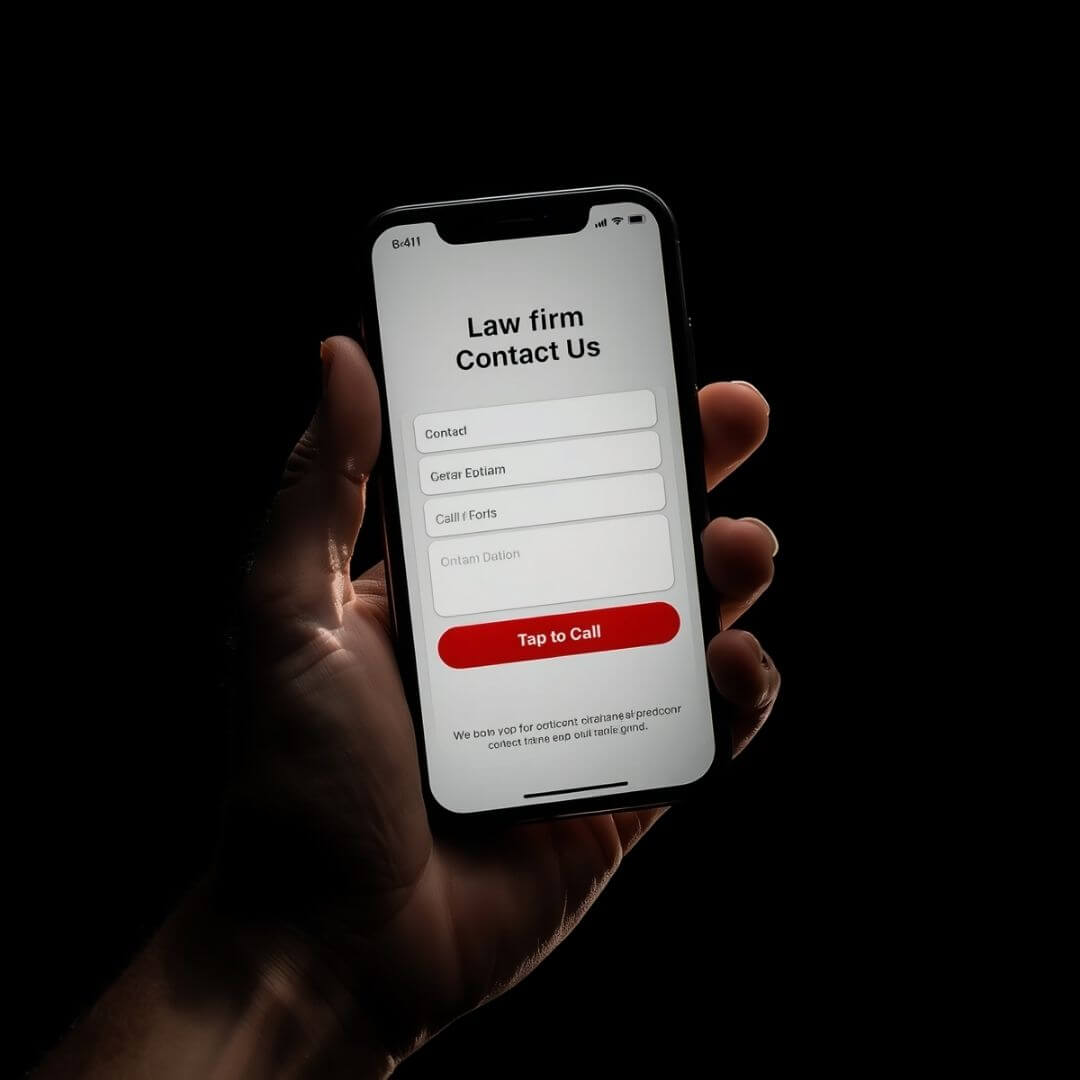
As with all criminal defense marketing, the majority of domestic violence searches happen on mobile devices, often within hours of an arrest or the filing of a protective order. The conversion principles from our criminal defense local SEO guide apply directly:
- Tap-to-call phone number visible without scrolling — on every page
- Confidentiality stated explicitly — “all consultations are confidential” matters even more here, given the personal and family nature of these cases
- A simple, low-friction contact form — three fields maximum
- Procedural content that builds trust before the call — a clear, accurate explanation of what a no-contact order means or what to expect at a first appearance demonstrates expertise and reduces anxiety, increasing the likelihood of a call
Implementation Roadmap
Phase 1: Foundation (Month 1–2)
- Keyword research split across general domestic violence, protective order, procedural, and outcome-focused categories
- Dedicated domestic violence ad groups built within the existing criminal defense campaign structure
- Landing page built specifically for domestic violence defense — confidentiality, procedural overview, clear CTA
- Negative keyword list reviewed for victim-resource and unrelated terms
Phase 2: Content and Procedural Authority (Month 2–4)
- State-specific content: “what happens after a domestic violence arrest in [state]”
- Protective order response guide with accurate timelines for your jurisdiction
- No-contact order FAQ page
- Review of ad copy tone against the guidance in this post
Phase 3: Seasonal and Ongoing Management (Month 4+)
- Evaluate holiday-season budget adjustment based on your own caseload history, not invented statistics
- Monthly search terms review
- Conversion rate tracking specific to the domestic violence landing page
Frequently Asked Questions About Domestic Violence Digital Marketing
Why does domestic violence defense need its own marketing campaign?
Domestic violence cases involve distinct search behavior, distinct urgency, and distinct legal procedure compared to other criminal defense matters — including emergency protective orders, mandatory no-contact periods, and short windows to respond. A dedicated campaign with matched keywords, ad copy, and a landing page addressing the specific situation converts more efficiently and reaches clients who need representation quickly, before procedural deadlines pass.
What keywords should domestic violence defense attorneys target?
High-intent keywords include “domestic violence attorney [city/state],” “protective order defense lawyer,” “restraining order attorney [city],” “domestic violence charge dismissed,” and “emergency protective order defense.” These differ from general criminal defense keywords because the searcher often needs to respond to a specific procedural deadline rather than simply seeking representation for an upcoming case.
Is it appropriate to market domestic violence defense services online?
Yes. Everyone charged with a crime in the United States has a constitutional right to legal representation and due process. Domestic violence charges range enormously in circumstance, and many cases involve disputed facts. Marketing legal representation for people facing these charges is a legitimate and necessary legal service, distinct from and not in conflict with the separate and equally important work of supporting victims of abuse.
Does domestic violence case volume increase during the holidays?
The research is mixed. Some organizations report seasonal increases tied to financial stress, alcohol, and family gatherings. Other advocates caution against the holiday-spike narrative, noting domestic violence reflects coercive control rather than situational triggers. Many criminal defense attorneys report an observed increase in case volume during the holidays based on their own caseloads, even where broader population data is inconclusive. Marketing decisions should weigh both the attorney’s direct experience and the limits of the underlying data.
What makes domestic violence defense marketing different from other criminal defense marketing?
Domestic violence cases often involve emergency procedural deadlines that don’t apply to other criminal matters — responding to a temporary restraining order, navigating a mandatory no-contact period, or addressing bail conditions that restrict where someone can live. Marketing for this practice area needs to account for these specific procedural pressures in ad copy and landing page content.
What Marketing Practicality delivers for domestic violence defense marketing:
- Dedicated campaign structure separate from general criminal defense
- Procedural content that captures searchers before they’ve decided to call an attorney
- Ad copy reviewed for tone — urgent and clear, without overstatement
- Landing pages built around confidentiality and procedural clarity
- Honest seasonal strategy based on your own caseload data, not invented statistics

A Practice Area That Deserves More Care, Not Less
Domestic violence defense is not a practice area to market with the same volume-first playbook used for DUI or general criminal defense. It requires more procedural specificity, more careful tone, and more honesty about what the underlying data does and doesn’t show.
Done well, it’s also one of the more meaningful areas of criminal defense marketing — connecting people facing a serious, time-sensitive legal situation with the representation they’re constitutionally entitled to, at the moment they most need to understand what’s happening to them.
Get a Free Criminal Defense Marketing Analysis
Share your website and current campaign details and we’ll show you where your domestic violence defense visibility stands.
Ready to build a domestic violence defense campaign that reaches clients responsibly?
Get a free campaign audit — we’ll show you exactly where your current criminal defense marketing is missing this practice area.
Schedule Your Free Strategy SessionBankruptcy Leads: Should You Buy Them or Build Your Own with Google Ads?
Bankruptcy Leads: Should You Buy Them or Build Your Own with Google Ads? A data-driven look at what purchased leads actually cost — and why…
Electrical Contractor Marketing: The Proven Guide
Electrical Contractor Marketing: The Proven System for Growing Your Electrical Business Google Ads, local SEO, and the compounding system behind electrical contractor marketing that generates…
Roofing Google Ads: The Proven Guide for Contractors
Roofing Google Ads: The Proven System for Roofing Contractors The storm response campaign structure, seasonal bidding strategy, and ad copy system behind roofing Google Ads…