
Criminal Defense Attorney Local SEO: The 2026 Guide
What Criminal Defense Attorneys Should Know About Local SEO in 2026
How to get your firm into the Google map pack — and keep it there — in one of the most competitive local search verticals in digital marketing
Someone gets arrested at 11 PM on a Friday. By midnight they’re on their phone searching “criminal defense attorney near me.” By 12:15 AM they’ve called the first number that answered. By Saturday morning your competitor has a new client.
I’m Duncan Lauder, President of Marketing Practicality, and I’ve spent over 25 years helping criminal defense firms build digital marketing systems that capture clients at exactly that moment — not the moment after. Criminal defense attorney local SEO is one of the highest-stakes and most competitive areas in legal digital marketing. The difference between appearing in the Google map pack and being invisible on page two isn’t a matter of luck or budget. It’s a matter of system.
This guide covers the complete local SEO framework for criminal defense attorneys in 2026 — what’s actually moving the needle, what’s changed, and what the firms dominating their local markets are doing differently.

Table of Contents
- Why Local SEO Is Different for Criminal Defense
- Google Business Profile: Your Most Valuable Local Asset
- Review Generation: The Ranking Factor Most Firms Ignore
- On-Page Local SEO for Criminal Defense Websites
- Content Strategy: Keywords That Convert, Not Just Rank
- Mobile Conversion: Where Local SEO Traffic Goes to Die
- Local SEO vs. Google Ads: How to Run Both
- Implementation Roadmap
- Frequently Asked Questions
Why Local SEO Is Different for Criminal Defense
Most legal verticals have a consideration phase. A personal injury client might research for weeks. An estate planning client might compare three or four attorneys before deciding. A criminal defense client does not have that luxury.
Arrests happen at night, on weekends, on holidays. The emotional state of the person searching — or their family member searching on their behalf — is panic, not deliberation. They need someone available, credible, and reachable right now. That context changes everything about how local SEO works for criminal defense practices.
The Map Pack Is Worth More Than Anything Else
The Google local map pack — the three business listings that appear at the top of local search results with a map — captures a disproportionate share of clicks for emergency-intent searches. When someone searches “criminal defense attorney near me” or “DUI lawyer [city]” at 11 PM, they are not scrolling down to organic results. They are clicking one of the three map pack listings, reading reviews for about 45 seconds, and making a call.
Getting into that map pack — and staying there — is the single highest-leverage action most criminal defense firms can take in their digital marketing. Everything else is secondary.
Real Results from Map Pack Optimization:
A New Jersey civil and criminal defense firm we’ve worked with since 2011 went from a referral-dependent practice to generating over 2,000 leads annually from digital channels. The combination of strong local SEO, an optimized Google Business Profile, and consistent review generation built the organic foundation that made paid search dramatically more efficient over time. See the full criminal defense case study for the complete data.
Google Business Profile: Your Most Valuable Local Asset
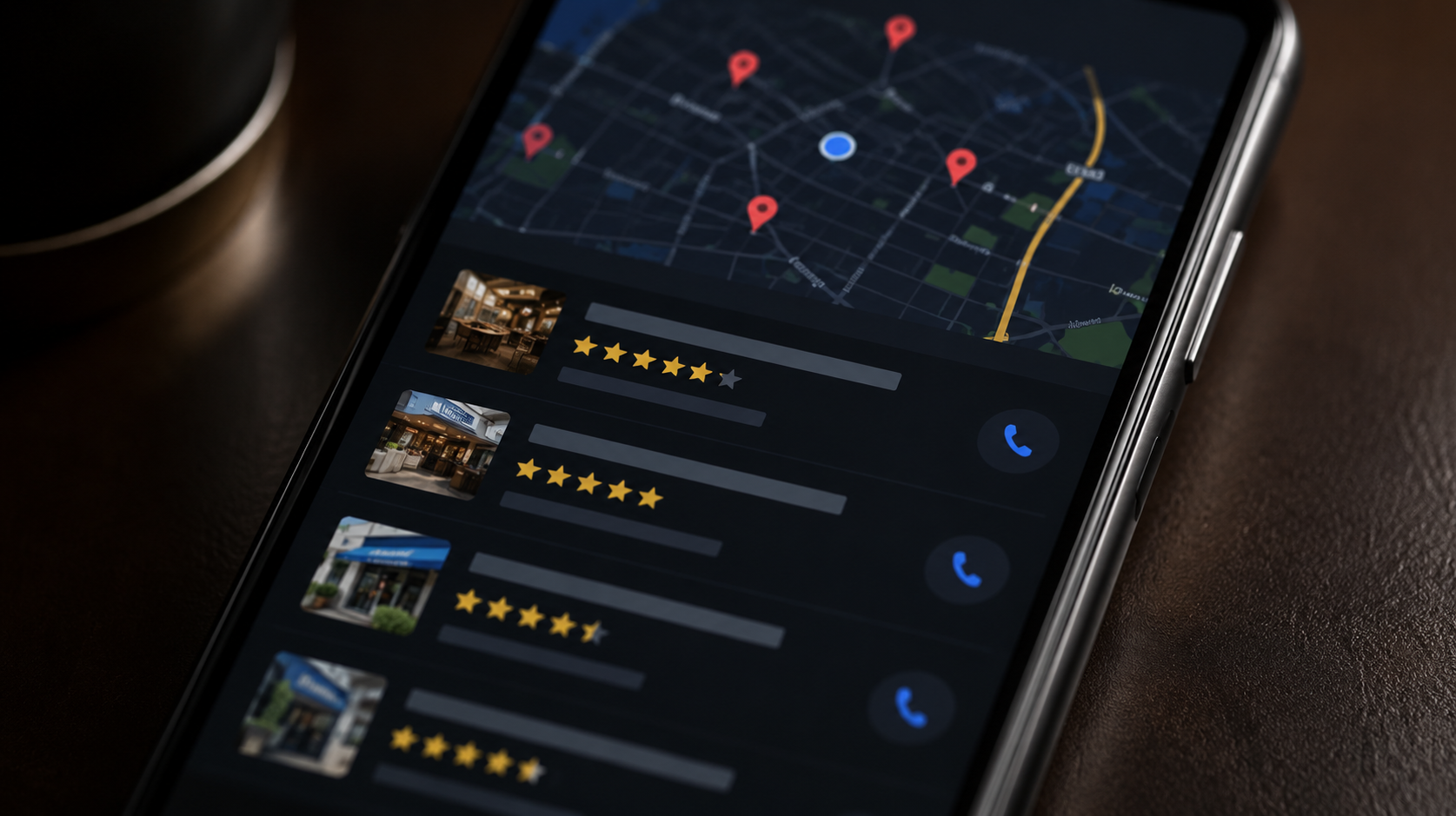
Your Google Business Profile (GBP) is the single most important local SEO asset a criminal defense attorney has. It controls your map pack listing, your knowledge panel, your review display, and your appearance in “near me” searches. Most criminal defense firms set it up once and forget it. The ones ranking consistently treat it as an active marketing channel.
Complete Profile Optimization
A fully optimized criminal defense GBP includes every field completed accurately:
- Business name — exactly as it appears on your website and other directories. No keyword stuffing in the business name — Google penalizes this and it looks unprofessional.
- Primary category — “Criminal Justice Attorney” or “Criminal Defense Lawyer” as your primary, with secondary categories for specific practice areas (DUI attorney, domestic violence attorney, etc.)
- Service area — list every city, county, and town you serve, not just your office location. Criminal defense clients search by their location, not yours.
- Services list — every practice area individually: DUI defense, drug charges, domestic violence, expungement, assault, federal criminal defense, white collar crime, etc.
- Hours — if you offer 24/7 emergency availability, say so explicitly. This is a ranking signal and a conversion signal simultaneously.
- Phone number — the number that gets answered immediately, not a general office line that goes to voicemail at 11 PM.
- Website link — linked to a page that continues the conversation from the GBP listing, not your generic homepage.
Photos and Visual Content
Google Business Profiles with regular photo updates rank higher and convert better. For criminal defense attorneys, appropriate photos include your office exterior and interior, your team (with permission), any awards or certifications displayed prominently, and your local area. Avoid stock photos — Google’s algorithm can detect them and they convert poorly. A photo of your actual office, however modest, outperforms a Getty Images courthouse every time.
Google Posts
Weekly Google Posts are one of the most underutilized local SEO tactics in criminal defense marketing. A short post about a recent case type you handle, a change in local DUI law, or a reminder about your 24/7 availability signals active practice to Google’s algorithm and provides fresh content for prospective clients reviewing your profile. Each post should include a call to action — “Call now for a free consultation” — with your phone number.
Q&A Section
Populate the Questions & Answers section of your GBP proactively. Ask and answer common questions yourself rather than waiting for prospects to ask them: “Do you offer free consultations?” “Are you available for emergency calls after hours?” “Do you handle federal criminal charges?” This content is indexed by Google and appears directly in your profile.
Review Generation: The Ranking Factor Most Firms Ignore

Google reviews are both a ranking signal and a conversion signal. The map pack algorithm weighs review quantity, recency, and rating. The human being looking at your listing weighs them too. In criminal defense, where trust is the primary purchase criterion, reviews do more work than in almost any other vertical.
The Review Generation Problem
Most criminal defense firms have fewer reviews than they should for a simple reason: nobody wants to publicize that they hired a criminal defense attorney. Asking for a Google review requires the client to associate their name publicly with a criminal charge. This creates a legitimate barrier that doesn’t exist in other practice areas.
The solution is a systematic process that makes reviewing as easy as possible while giving clients a path that doesn’t require them to say what the case was about:
A Systematic Criminal Defense Review Process
- Attorney verbal request at case conclusion — “We really appreciate clients who share their experience with our firm — if you’re comfortable leaving a Google review, it helps other people in similar situations find us.”
- Automated SMS within 24 hours of case conclusion — with a direct link to your Google review page. Keep the message brief: “Thank you for trusting us with your case. If you’re willing to share your experience, here’s a link to our Google reviews.”
- Email follow-up 48 hours later — for non-responders. Include context that reassures: “You don’t need to mention case details — many clients simply share their experience working with our team.”
- Respond to every review — positive and negative — within 48 hours. Your responses are indexed and read by prospective clients. How you handle a negative review tells people more about your firm than the negative review itself.
Review Velocity Matters More Than Total Count:
A firm with 30 reviews receiving 3-4 new reviews per month will often outrank a firm with 100 reviews that hasn’t received a new one in six months. Google’s algorithm rewards consistent activity, not historical achievement. Build a review generation process that runs automatically, not one that requires you to remember to ask.
On-Page Local SEO for Criminal Defense Websites
Your Google Business Profile gets you into the map pack. Your website gets you into the organic results below it — and provides the landing page experience that converts GBP visitors into leads. Both matter. A strong GBP with a weak website converts poorly. A strong website with a weak GBP is invisible in local search.
Location-Specific Practice Area Pages
The most important on-page local SEO investment for a criminal defense firm is a library of location-specific practice area pages. Not one “DUI defense” page — a “DUI defense attorney [city]” page for every significant city in your service area. Not one “drug charges” page — a “drug charge attorney [county]” page for each county you serve.
This structure works because criminal defense clients search with location modifiers. “Criminal defense attorney Cherry Hill NJ” and “DUI lawyer Camden County” are different searches with different intent. A page optimized for each captures traffic that a generic practice area page misses entirely.
NAP Consistency
Your Name, Address, and Phone number (NAP) must be identical across your website, your GBP, and every directory where your firm appears — Avvo, FindLaw, Justia, Yelp, the state bar directory, and every other legal listing site. A single digit difference in a phone number or a street abbreviation inconsistency (“St” vs “Street”) creates a local SEO signal conflict that suppresses rankings. Run a NAP audit across all listings annually at minimum.
Schema Markup for Law Firms
Legal practice schema markup — specifically LegalService and Attorney schema — helps Google understand your content and can enhance your search appearance with rich snippets. At minimum, implement schema that specifies your practice areas, service area, hours of operation, and contact information. Our website development team builds schema markup into every law firm site we build as a standard component, not an afterthought.
Content Strategy: Keywords That Convert, Not Just Rank

Criminal defense content strategy has a fundamental tension: the keywords with the highest search volume are often research-phase queries that don’t convert into leads. The keywords with the highest conversion intent are often lower volume but worth far more per click.
High-Intent Keywords to Target
Emergency / Immediate Need:
- “Criminal defense attorney near me”
- “DUI lawyer [city]”
- “Criminal defense attorney [city] available now”
- “What to do if arrested in [state]”
- “How to find a criminal defense lawyer tonight”
Practice Area Specific:
- “Domestic violence attorney [city]”
- “Drug possession lawyer [county]”
- “Expungement attorney [state]”
- “Federal criminal defense lawyer [city]”
- “DWI defense attorney [city]”
Research Phase (lower conversion, builds authority):
- “How much does a criminal defense attorney cost”
- “What happens after a DUI arrest”
- “First offense drug charge [state]”
- “Criminal record expungement eligibility [state]”
The content strategy that works consistently targets the high-intent keywords first — building location-specific practice area pages — and then builds out research-phase content that demonstrates expertise and earns organic authority over time. As covered in our post on the 2 AM call, understanding the emotional state of your searcher changes how you write for every keyword category.
Content That Builds Local Authority
Beyond practice area pages, criminal defense firms build local SEO authority through content that is specifically relevant to their jurisdiction:
- State-specific DUI law guides (“New Jersey DUI laws and penalties”)
- Local courthouse guides (“What to expect at Camden County criminal court”)
- Recent changes in local criminal law
- Expungement eligibility guides by state
- FAQs about the local criminal process
This type of content signals genuine local expertise to both Google and prospective clients — neither of whom is fooled by generic “criminal defense attorney” content that could have been written about any market in the country.
Mobile Conversion: Where Local SEO Traffic Goes to Die
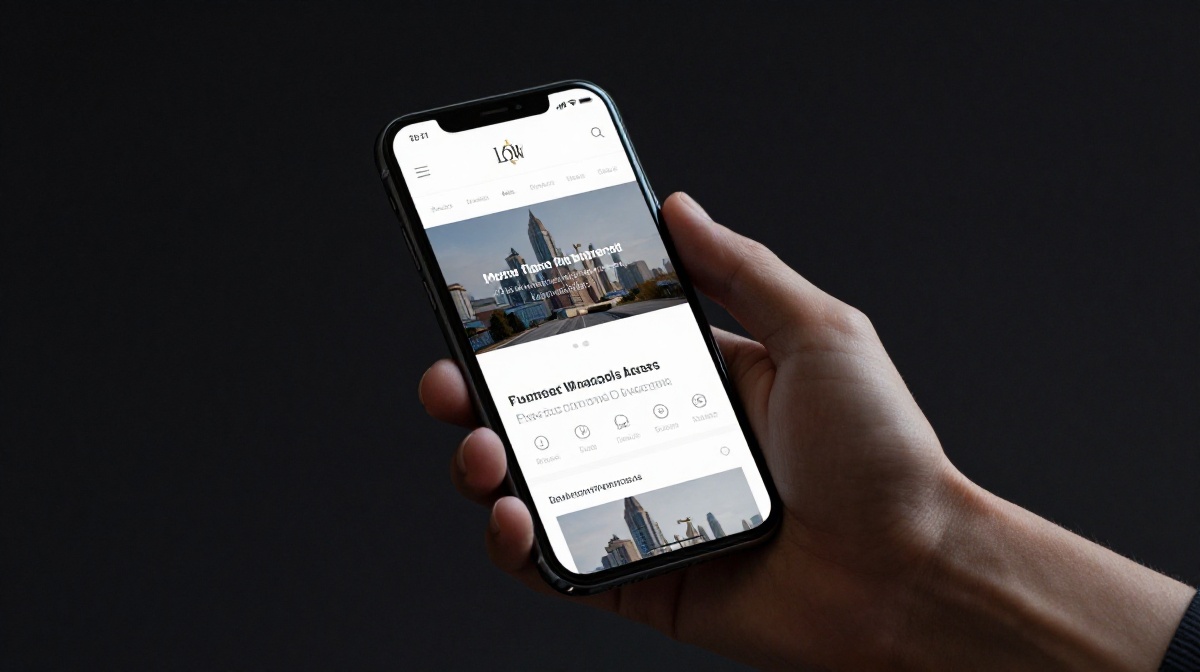
The majority of criminal defense searches happen on mobile devices, often at night, often under stress. Getting a prospect to click your map pack listing is step one. Converting that click into a contact is step two — and it’s where most criminal defense firms lose the lead they just paid to acquire.
As we covered in the conversion rate and cost per lead post, the same click budget can produce dramatically different lead volumes depending on how well your site converts. For criminal defense, mobile conversion is the most important lever in the system.
Mobile Conversion Requirements for Criminal Defense Sites
- Load time under 2.5 seconds on mobile — every additional second costs conversions. A panicked person searching at midnight has zero patience for a slow site.
- Tap-to-call phone number visible without scrolling — on every page, in the header, always. If someone has to scroll to find your phone number, you’ve already lost a percentage of your leads.
- Simple contact form — three fields maximum — name, phone, and what they need help with. Every additional field reduces completion rate. You can collect more information after the lead is captured, not before.
- 24/7 availability signal above the fold — “We answer calls 24 hours a day, 7 days a week” is not just a service description. For someone arrested at 2 AM, it’s the deciding factor between calling you and calling the next result.
- Social proof immediately visible — star rating and review count without scrolling. In an emergency, trust signals need to be instant.
Our website development practice builds criminal defense sites around mobile conversion as the primary design constraint. The desktop version is secondary. Where and how the site converts on a phone at midnight is the question that drives every design decision.
Local SEO vs. Google Ads: How to Run Both
Criminal defense attorneys frequently ask whether they should focus on local SEO or Google Ads. The answer is almost always both — and the reasoning is straightforward.
Local SEO builds compounding organic visibility that reduces your cost per lead over time. A firm that has invested consistently in local SEO for three years is generating leads from the map pack and organic results at a fraction of what a paid search campaign costs. But it takes time to build.
Google Ads delivers immediate lead flow — from day one of the campaign. The moment your ads go live, your firm appears at the top of search results for your target keywords. But it stops the moment your budget stops. There’s no residual benefit from a paused Google Ads campaign the way there is from established organic rankings.
The optimal strategy runs both in parallel: Google Ads provides immediate leads while local SEO builds. As organic rankings improve and the map pack listing gains authority, the cost per lead from paid search typically decreases — because a strong organic presence raises your overall Quality Score and domain authority. As documented in our Google Ads optimization post, consistent long-term management compounds efficiency in ways that no amount of short-term budget increase can replicate.
Cost per lead reduction achieved for a New Jersey criminal defense firm over 10 years — from $787 per lead in 2015 to $15 per lead in 2025. The combination of local SEO, optimized Google Ads, and mobile conversion built a system that compounds over time. See the full case study →
Implementation Roadmap for Criminal Defense Local SEO
Phase 1: Foundation (Month 1–2)
- Google Business Profile complete audit and optimization
- NAP consistency audit across all directories
- Website mobile speed and conversion audit
- Review generation process launch
- Schema markup implementation
- Competitor local SEO gap analysis
Phase 2: Content and Authority (Month 2–5)
- Location-specific practice area page build-out
- High-intent keyword content creation
- Local citation building and directory submissions
- Weekly Google Posts cadence established
- Q&A section populated on GBP
- Google Ads campaign launched in parallel
Phase 3: Optimization and Scaling (Month 5–12)
- Map pack ranking monitoring and gap analysis
- Review velocity tracking and process optimization
- Content expansion into research-phase keywords
- Local link building from bar associations, legal directories, and local publications
- Quarterly NAP and GBP audit
- Conversion rate optimization on key landing pages
Frequently Asked Questions About Criminal Defense Attorney Local SEO
How important is local SEO for criminal defense attorneys?
Local SEO is arguably the most important digital marketing channel for criminal defense attorneys. The majority of criminal defense clients search for an attorney immediately after an arrest or charge — on their phone, in their local area, at all hours. Appearing in the Google map pack for searches like “criminal defense attorney near me” or “DUI lawyer [city]” puts your firm in front of high-intent prospects at exactly the moment they’re ready to hire. Firms that dominate the local map pack consistently outperform those that rely solely on paid search or organic rankings.
How long does local SEO take for a criminal defense law firm?
Google Business Profile optimization typically shows results within 60-90 days with consistent effort. Full map pack rankings for competitive criminal defense keywords in major markets take 6-12 months of sustained optimization. Starting with GBP optimization and running Google Ads in parallel gives you immediate lead flow while your organic rankings build.
What are the most important local SEO factors for criminal defense attorneys?
The three most important local SEO factors are: Google Business Profile completeness and activity; review volume and recency; and website relevance signals including location-specific practice area pages, consistent NAP information, and mobile-optimized site speed. Proximity to the searcher also plays a role, which is why service area configuration in GBP matters.
Should criminal defense attorneys use Google Ads alongside local SEO?
Yes — and the combination is more powerful than either channel alone. Local SEO builds long-term organic visibility that compounds over time and eventually reduces your cost per lead. Google Ads delivers immediate lead flow while your SEO rankings are building. The firms that consistently outperform their markets run both in parallel from the start.
How many Google reviews does a criminal defense attorney need to rank in the map pack?
Competitive criminal defense markets typically require a minimum of 25-50 reviews with a rating above 4.7 stars to be competitive in the map pack. More important than total count is review velocity — Google rewards profiles that receive a consistent flow of new reviews. A firm with 30 reviews receiving 3-4 new reviews per month will often outperform a firm with 100 reviews that hasn’t received a new one in six months.
What Marketing Practicality delivers for criminal defense firms:
- Google Business Profile optimization that moves map pack rankings within 60-90 days
- Location-specific practice area content that captures high-intent local searches
- Review generation systems that build consistent velocity without requiring clients to publicize their cases
- Mobile-optimized websites built to convert the 2 AM searcher
- Google Ads campaigns running in parallel to deliver leads while organic rankings build
- Transparent reporting connecting every marketing activity to leads and cost per lead

Local SEO Is a System, Not a Project
The criminal defense firms that dominate their local markets didn’t get there with a one-time optimization push. They got there by treating local SEO as an ongoing system — consistent GBP activity, steady review generation, regular content production, and monthly performance review — month after month, year after year.
The practical starting point is your Google Business Profile. Audit it today against the checklist in this post. Fix every incomplete field. Add photos. Set up a review request process. Start posting weekly. That single asset, properly optimized and actively maintained, moves the needle faster than any other local SEO action available to a criminal defense firm.
Everything else builds from there.
Ready to dominate your local criminal defense market?
Get a free website and local SEO analysis — we’ll show you exactly where your biggest opportunities are and what it would take to move your firm into the map pack.
Schedule Your Free Strategy SessionBankruptcy Leads: Should You Buy Them or Build Your Own with Google Ads?
Bankruptcy Leads: Should You Buy Them or Build Your Own with Google Ads? A data-driven look at what purchased leads actually cost — and why…
Electrical Contractor Marketing: The Proven Guide
Electrical Contractor Marketing: The Proven System for Growing Your Electrical Business Google Ads, local SEO, and the compounding system behind electrical contractor marketing that generates…
Roofing Google Ads: The Proven Guide for Contractors
Roofing Google Ads: The Proven System for Roofing Contractors The storm response campaign structure, seasonal bidding strategy, and ad copy system behind roofing Google Ads…