
Domestic Violence Attorney Marketing Checklist (2026)

This checklist is written for criminal defense attorneys who represent clients charged with domestic violence offenses. It covers the essential digital marketing elements for this practice area — from keyword targeting and campaign structure to website conversion and local SEO — with specific attention to the procedural urgency and tonal sensitivity this area of law requires.
Domestic violence defense is a year-round practice. This checklist is designed for regular use, not just seasonal campaigns.
This checklist covers marketing for attorneys defending people charged with domestic violence offenses. It does not address victim advocacy resources or marketing. Those are separate services for a separate audience. If you or someone you know needs support as a victim of domestic violence, contact the National Domestic Violence Hotline at 1-800-799-7233.
7 Keywords Every Domestic Violence Defense Attorney Should Target
“Domestic violence attorney [your city/state]”
The primary high-intent keyword for this practice area. Someone searching this term has already been charged or is helping a family member who has been charged. They need representation now. This keyword should be the foundation of both your Google Ads campaign and your local SEO content strategy. Build a dedicated page targeting this term for every major city in your service area.
“Domestic violence charge dismissed [state]”
An outcome-focused keyword that captures clients who have already started researching their options and want to understand the realistic possibilities. This search signals someone who has moved past initial shock into active decision-making. Content and landing pages targeting this term should address the realistic circumstances under which charges may be reduced or dismissed — accurately and without overpromising.
“Protective order defense attorney [city]”
Protective and restraining order searches often come from people who haven’t been criminally charged but are facing a civil protective order — a related but procedurally distinct matter. This keyword category has its own urgency: protective order hearings have hard deadlines, and a respondent who doesn’t appear or respond risks a default order. Make the timeline clear in your ad copy and landing page.
“Restraining order attorney near me”
A high-urgency near-me search from someone responding to a restraining order who needs help immediately. Local map pack visibility is critical for this keyword — the person searching is almost certainly on their phone and will call the first credible local result. Google Business Profile optimization and review volume directly determine whether you appear in those results.
“What happens after a domestic violence arrest [state]”
A procedural question keyword that captures searchers in the first hours after an arrest — before they’ve necessarily decided to hire an attorney. Content that accurately answers this question (no-contact order implications, mandatory hold periods, first appearance timeline) builds trust and positions your firm as the knowledgeable resource at exactly the right moment. Include a clear CTA at the end of every procedural content page.
“No contact order [state]” or “can I go home after domestic violence charge”
One of the most immediate concerns for someone charged with domestic violence is what the no-contact order means for where they can live and who they can speak to. This search reflects that specific anxiety. A page or FAQ section that answers this question clearly — for your specific state’s laws — captures a high-need audience and demonstrates jurisdiction-specific expertise that generic content cannot match.
“Domestic violence expungement [state]”
A separate keyword category targeting clients whose cases are resolved and who want to understand their record expungement options. Lower urgency than arrest-phase searches but a meaningful audience — and one that often converts into new representation engagements. Expungement eligibility varies significantly by state; state-specific content ranks more effectively than generic expungement guidance.
5 Website Elements That Convert Domestic Violence Defense Clients
Confidentiality Statement Prominently Displayed
Domestic violence cases involve deeply personal family circumstances. The person searching — or the family member searching on their behalf — is acutely aware of the sensitivity of the situation. A clear confidentiality statement (“all consultations are strictly confidential”) must be visible above the fold on every relevant page. Without it, you lose a meaningful percentage of visitors who aren’t yet comfortable disclosing their situation. This is not a generic legal disclaimer — it’s a conversion element specific to this practice area.
Procedural Clarity Before the Sales Pitch
Domestic violence clients often arrive at your site with specific, urgent procedural questions — what does a no-contact order mean for my living situation, what happens at a first appearance, can I see my children. A landing page that answers these questions clearly and accurately, before asking for a consultation, builds the trust that makes the consultation request more likely. Expertise demonstrated through specific procedural knowledge converts better than credential lists in this practice area.
Mobile-Optimized Tap-to-Call Above the Fold
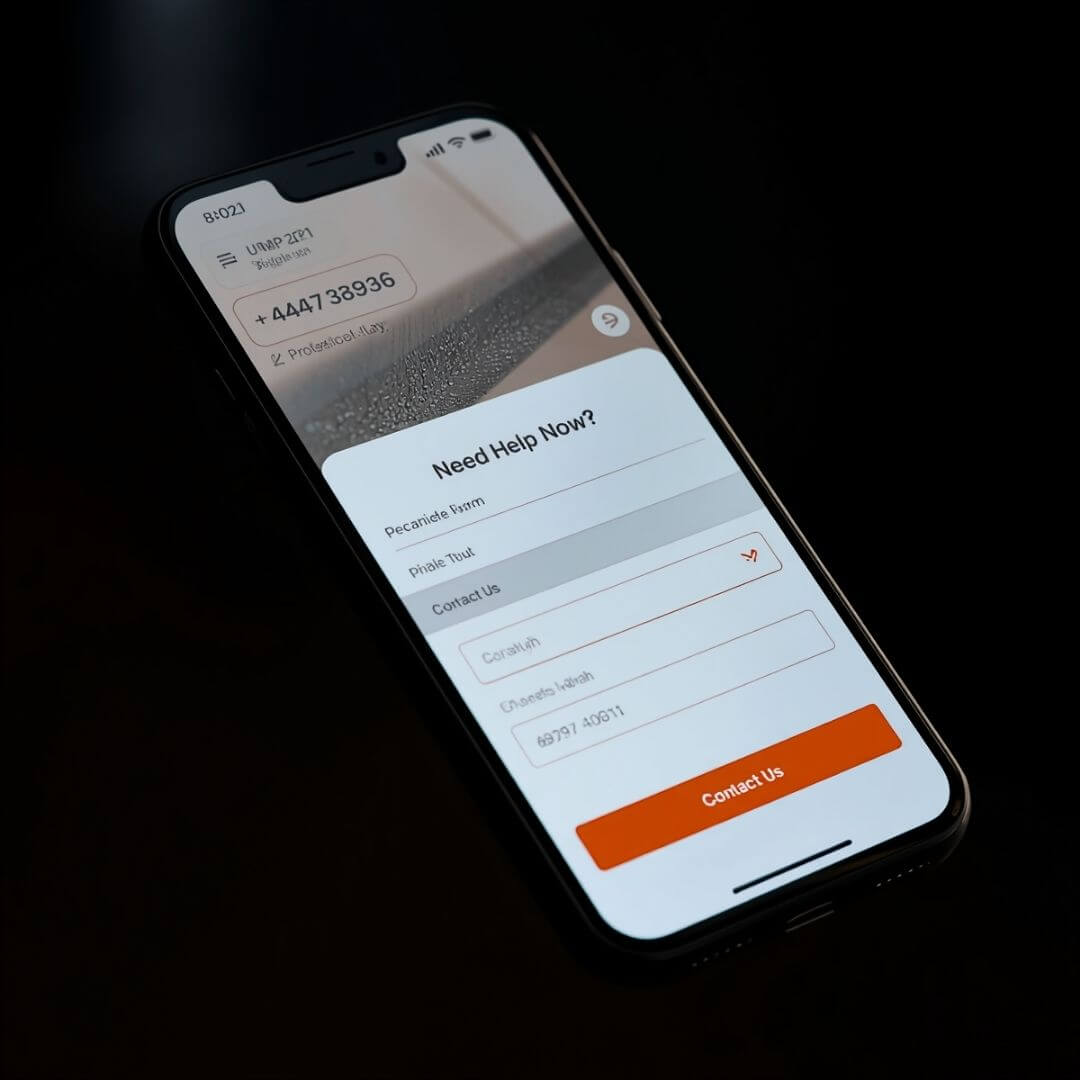
The majority of domestic violence searches happen on mobile devices, frequently within hours of an arrest. Your phone number must be tap-to-call, visible in the header without scrolling, on every page. A domestic violence client searching at 11 PM from a family member’s kitchen table is not going to hunt for a buried contact form. Make the path to contact one tap.
Simple Three-Field Contact Form
Name, phone number, and a brief description of the situation. That’s it. Every additional field reduces completion rate for an audience that is already reluctant to disclose sensitive information. Collect more details after the lead is captured — not before. The goal of the form is to get a name and a phone number so you can call back. Everything else is friction.
Tone That Is Serious Without Being Alarming
Domestic violence defense websites that lead with aggressive “fight the charges” language or sensationalized statistics damage credibility with an audience that is frightened, not defiant. Affirm the legitimacy of legal representation, the complexity of these cases, and your specific experience — without minimizing what domestic violence is or overpromising outcomes. The websites that convert best in this practice area are the ones that feel like a credible, calm resource in a frightening situation.
Common PPC Mistakes in Domestic Violence Defense Campaigns
No Dedicated Domestic Violence Campaign
Running domestic violence keywords inside a general criminal defense campaign produces mediocre results for both. Domestic violence searches come from a specific emotional state, require specific procedural information, and convert on different landing pages than DUI or drug charge searches. A dedicated campaign with its own keywords, ad copy, and landing page consistently outperforms a catch-all approach. If you handle domestic violence cases, give the practice area its own campaign.
Ad Copy That Minimizes or Sensationalizes
Two tonal failures appear frequently in domestic violence defense advertising. The first is ad copy that implies all domestic violence accusations are false or exaggerated — most are not, and this framing is both inaccurate and reputationally damaging. The second is overly aggressive “fight back” language that trivializes the underlying conduct. Neither converts well and both carry reputational risk. Write ad copy that affirms the right to representation and the complexity of these cases — not copy that stakes out a position on the underlying facts of a case you haven’t seen.
Missing Procedural Keywords
The most commonly missed keyword category in domestic violence campaigns is procedural — “what happens after a domestic violence arrest,” “no contact order [state],” “how long does a domestic violence case take.” These searches happen in the first hours after an arrest and represent the highest-urgency leads in the practice area. A campaign without procedural keywords misses a significant portion of the audience that needs representation most immediately.
No Separate Protective Order Campaign
Protective and restraining order searches produce a distinct audience from domestic violence criminal charges. Someone responding to a civil protective order has different immediate needs and different search behavior than someone arrested on a criminal charge. A separate ad group or campaign targeting protective order keywords — with a landing page that addresses the specific hearing deadline and response process — captures leads that a general criminal defense campaign never reaches.
Overstated or Invented Statistics in Ad Copy
The research on domestic violence seasonality is genuinely mixed. Ad copy that claims a specific percentage increase in domestic violence charges during the holidays, without a credible documented source, is both inaccurate and potentially damaging to your credibility with a sophisticated audience. Base seasonal campaign decisions on your own caseload history. If your practice sees more domestic violence cases during the holiday season, that’s a legitimate basis for increasing your budget — but say so in terms of your own professional experience, not invented statistics.
3 Local SEO Priorities for Domestic Violence Defense Practices
Google Business Profile Accuracy for This Practice Area
List domestic violence defense explicitly as a service in your Google Business Profile — alongside DUI, drug charges, and your other criminal defense practice areas. Many criminal defense attorneys omit this from their GBP because they handle it incidentally rather than as a named specialty. If you handle these cases, name it in your profile. Local searches for “domestic violence attorney near me” favor GBP profiles that list the specific service over those that only list “criminal defense attorney.”
Location-Specific Procedural Content
Domestic violence laws, no-contact order procedures, mandatory hold periods, and protective order timelines vary significantly by state and sometimes by county. Content that addresses the specific laws and procedures in your jurisdiction — “what happens after a domestic violence arrest in New Jersey,” “emergency protective order process in Pennsylvania” — ranks for local searches and builds credibility that generic national content cannot replicate. Write for your jurisdiction, not for the internet in general.
Review Generation Despite Sensitivity Constraints
Domestic violence clients face the same privacy reluctance as bankruptcy and professional license defense clients — they’re unlikely to publicly advertise that they needed a domestic violence defense attorney. The review request process needs to acknowledge this: ask clients to share their experience working with your team, not the specifics of their case. Timing matters — request reviews at case conclusion, not during active representation. Reviews that speak to responsiveness, availability, and professionalism convert well even without case-specific details.
4 Content Types That Build Domestic Violence Defense Authority
State-Specific Procedural Guides
“What happens after a domestic violence arrest in [state]” is searched frequently and answered poorly by most legal content online. A guide that accurately covers the arrest process, mandatory hold periods, no-contact order implications, first appearance timeline, and bail conditions in your specific state provides genuine value to a high-need audience and ranks for searches that most criminal defense content never targets. This is the clearest example of non-commodity content in this practice area — content only a licensed attorney in your jurisdiction can write accurately.
No-Contact Order FAQ Pages
“Can I go home after a domestic violence charge,” “can I text my partner if there’s a no-contact order,” and “what happens if I violate a no-contact order” are searched constantly by people who have been charged and are confused about what they’re legally permitted to do. A FAQ page that answers these questions clearly and accurately for your state captures a high-urgency audience and demonstrates exactly the kind of specific, actionable expertise that converts into consultations.
Protective Order Response Guides
A step-by-step guide to responding to a temporary protective order in your state — what the hearing process looks like, what evidence is relevant, what the timeline is — serves a distinct audience from the criminal charge audience and ranks for a distinct set of keywords. Many people facing civil protective orders don’t immediately think “I need a criminal defense attorney.” Content that surfaces your firm in that search and explains how you can help bridges that gap.
Expungement Eligibility Content
Once a domestic violence case is resolved, many clients want to understand their record expungement options. State-specific expungement eligibility content — “can a domestic violence charge be expunged in [state],” “domestic violence expungement eligibility [state]” — captures a lower-urgency but high-intent audience and often leads to new representation engagements. This content also serves a useful SEO function by keeping your domestic violence content presence active on searches beyond the immediate arrest phase.

Audit your current criminal defense campaign against this checklist. If domestic violence defense is handled inside a general campaign with no dedicated keywords, landing page, or procedural content, that’s the highest-priority gap to close. The procedural keyword category — “what happens after a domestic violence arrest,” “no contact order [state]” — is the fastest win and the most underserved segment in most criminal defense campaigns.
Ready to build a domestic violence defense campaign that reaches clients responsibly?
We’ll show you exactly where your criminal defense marketing is missing this practice area — and what a dedicated domestic violence campaign looks like in practice.