
Roofing Company Digital Marketing: A Strategic Guide to Year-Round Lead Generation
How to build a roofing marketing system that generates leads in storm season, slow season, and every season in between
Most roofing companies market reactively. A storm rolls through, phones ring, the Google Ads budget spikes, and for three weeks business is great. Then the storm season ends, the budget gets cut, and the company waits for the next weather event to bring leads back.
I’m Duncan Lauder, President of Marketing Practicality, and I’ve spent over 25 years building digital marketing systems for trades businesses across roofing, HVAC, plumbing, and elevator service. Roofing company digital marketing works differently from most trades verticals because the demand is both seasonal and unpredictable — storm events create sudden spikes that reward whoever is best positioned to capture them. Building that positioning before the storm is the whole game.
This guide covers the complete digital marketing framework for roofing contractors in 2026 — local SEO, Google Ads, storm response strategy, seasonal content, and the review system that makes everything else more effective.
Table of Contents
- Why Most Roofing Digital Marketing Fails
- Local SEO: Getting Into the Map Pack Before You Need It
- Google Ads for Roofing: High-Intent Leads at Predictable Cost
- Storm Response Marketing: Capturing the Surge
- Seasonal Strategy: Building Pipeline in Every Month
- Review Generation: The Trust Signal That Wins the Comparison
- Website Conversion: Turning Visitors Into Estimate Requests
- Implementation Roadmap
- Frequently Asked Questions
Why Most Roofing Digital Marketing Fails
The Reactive Marketing Trap
The roofing industry has a built-in marketing problem: storm demand creates the illusion that marketing is working when it isn’t. When a hailstorm hits your market, your phone rings regardless of how good your Google Ads are or how optimized your website is. The storm did the marketing. You just answered the phone.
The companies that consistently dominate their markets aren’t the ones with the best storm response. They’re the ones who built visibility, credibility, and lead systems before the storm arrived — so when it hit, they captured ten leads while their competitors captured two.
The Three Gaps Holding Most Roofing Companies Back
- Visibility gap — Not appearing in the map pack for the searches homeowners run before they call anyone
- Timing gap — Having no storm response campaign infrastructure in place, so by the time campaigns launch, competitors are already booked out
- Continuity gap — Going dark during slow months and rebuilding from zero every spring, paying premium prices to re-establish positions competitors maintained year-round
The same compounding efficiency pattern we’ve documented in our Google Ads optimization post applies directly to roofing: consistent year-round management produces dramatically better results than seasonal bursts, at lower cost per lead over time.
Local SEO: Getting Into the Map Pack Before You Need It

When a homeowner searches “roofing contractor near me” after a storm, they are not going to page two of Google. They click one of the three map pack listings, spend 30 seconds reading reviews, and call. The map pack is worth more than any other digital asset a roofing company has — and most roofing companies treat their Google Business Profile like a set-it-and-forget-it directory listing.
Google Business Profile Optimization for Roofers
A properly optimized roofing GBP includes every field completed with precision:
- Primary category — “Roofing Contractor” as primary, with secondary categories for related services: “Gutter Cleaning Service,” “Siding Contractor,” “Insulation Contractor” where applicable
- Service area — Every city, county, and town in your actual service footprint, not just your office location
- Services list — Roof replacement, roof repair, emergency roof repair, storm damage repair, gutter installation, roof inspection, insurance claim assistance — listed individually
- Photos updated regularly — Completed jobs (before and after), your crew, your trucks, your materials. Real photos of real work outperform stock imagery significantly for both rankings and conversions.
- Weekly Google Posts — Project highlights, seasonal tips, storm preparation content. Consistent posting signals an active business to Google’s local algorithm.
- Q&A section populated — “Do you handle insurance claims?” “Do you offer free estimates?” “What areas do you serve?” Answer these yourself rather than leaving them blank.
High-Converting Roofing Keywords
Emergency and Storm-Related (Highest Intent):
- “Emergency roof repair [city]”
- “Storm damage roof repair [city]”
- “Hail damage roof repair [city]”
- “Roof leak repair near me”
- “Roof tarping near me”
Replacement and Installation:
- “Roof replacement [city]”
- “Roof replacement cost [city]”
- “New roof installation [city]”
- “Best roofing contractor [city]”
- “Roofing contractor near me”
Inspection and Maintenance:
- “Roof inspection [city]”
- “Free roof inspection [city]”
- “Roof inspection near me”
- “Roof maintenance [city]”
The insurance claim keyword opportunity:
Many homeowners searching after storm damage are specifically looking for help navigating their insurance claim. “Roof insurance claim [city]” and “storm damage insurance claim roofing [city]” capture a high-intent audience that most roofing companies don’t specifically target. Building content and landing pages around insurance claim assistance positions your company as a full-service solution rather than just another contractor bidding on the job.
Google Ads for Roofing: High-Intent Leads at Predictable Cost

Google Ads for roofing companies works differently than most trades verticals because the demand is both predictable (seasonal replacement cycles) and unpredictable (storm events). An effective roofing Google Ads strategy addresses both with separate campaign structures.
Campaign Structure for Roofing Companies
Campaign 1: Emergency and Storm Response
Targets high-urgency searches with immediate availability messaging. Ad copy leads with speed: “Emergency roof repair — same-day response,” “Storm damage assessment — call now,” “Roof leak? We answer 24/7.” This campaign should have call extensions active at all times and be structured to activate quickly with a budget increase when severe weather hits your service area.
Campaign 2: Replacement and Installation
Targets homeowners in the research and decision phase for roof replacement. Longer consideration window, higher average job value. Ad copy emphasizes financing options, warranty, local reputation, and free estimates. These leads don’t always convert immediately — a CRM follow-up sequence is essential for this campaign to maximize ROI.
Campaign 3: Inspection and Maintenance
Lower cost per click, lower urgency, strong seasonal play in late summer and fall. “Free roof inspection before winter” and “roof maintenance checklist” target homeowners thinking proactively about their roof. This campaign generates lower-ticket work that often leads to replacement referrals and repeat business.
Ad Copy That Works for Roofing
As we’ve covered in our post on the 2 AM call, emergency service businesses win clicks by signaling availability and specificity rather than leading with credentials. For roofing:
- “Storm damage? Free assessment — same day response” outperforms “20 years of roofing experience”
- “Roof leak repair [city] — emergency calls welcome” outperforms “trusted local roofing contractor”
- “Free roof inspection + insurance claim help” outperforms “quality roofing at fair prices”
Geographic Targeting Precision
Most roofing companies overbid on geography and underbid on time. A roofing company serving a 30-mile radius should have higher bids in the zip codes with the highest job density — typically established residential neighborhoods with aging housing stock — and lower bids in areas where conversion rates are historically lower. Ad scheduling should weight bids higher in the evening and on weekends, when homeowners notice problems and start searching.
Storm Response Marketing: Capturing the Surge
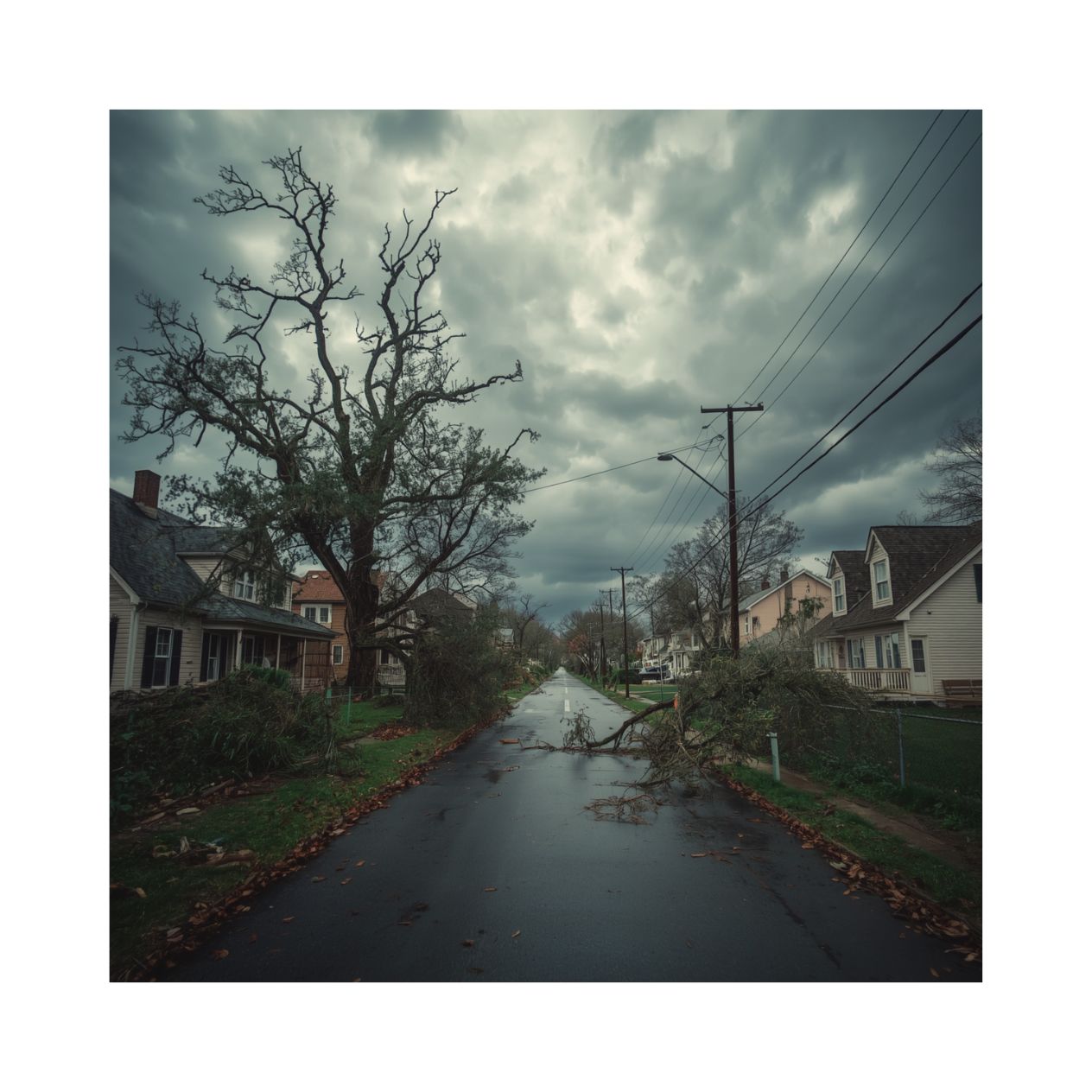
Storm response is the highest-ROI single opportunity in roofing marketing — and it’s almost entirely determined by preparation. The roofing companies that capture the most storm leads are not the ones with the best advertising. They’re the ones with advertising infrastructure ready to deploy before the storm arrives.
The Storm Response Campaign Framework
Build this before storm season, not during it:
- Pre-built storm campaign — A Google Ads campaign with storm-specific ad copy and landing pages, built and paused in normal conditions. When severe weather hits your service area, you activate and increase the budget within hours — not days.
- Geo-targeted to affected zip codes — Immediately after a storm event, narrow your geographic targeting to the specific areas that took damage. Homeowners in affected neighborhoods have immediate need. Homeowners in untouched neighborhoods do not.
- Storm-specific landing page — A dedicated page for storm damage that covers the process: assessment, documentation, insurance claim support, timeline. This page converts better than your general roofing page for storm traffic because it speaks specifically to the situation the visitor is in.
- Rapid response protocol — The fastest responder wins the job in storm conditions. An automated text or email sent within minutes of a form submission — “We received your request and will call you within 30 minutes” — prevents leads from calling the next result while they wait.
Why preparation beats reaction every time:
A roofing company building a storm campaign the day after a major hailstorm is competing against companies that had campaigns live within hours. By the time a reactive campaign launches, the highest-urgency leads — the ones calling the same day — have already booked with whoever showed up first. Storm marketing is won in the off-season, not during the storm.
Seasonal Strategy: Building Pipeline in Every Month
The roofing companies that consistently outperform their markets have solved the slow season problem. Not by finding more storm work in winter — but by building demand that doesn’t require a weather event to exist.
Late Summer (August — September): Inspection and Pre-Winter Campaigns
August and September are the best months to capture homeowners who noticed roof issues during summer but haven’t acted yet. The messaging shifts from emergency repair to proactive planning:
- “Free roof inspection before fall — catch small problems before they become big ones”
- “Is your roof ready for winter? Schedule a free assessment”
- “Summer storms may have damaged your roof without you knowing — free inspection”
Email campaigns to past customers offering pre-winter inspections consistently convert because the audience already has a relationship with your company. This is also the best time to promote maintenance agreements — the recurring revenue model that smooths cash flow through every slow month.
Fall (October — November): Replacement Research Season
Homeowners who have been thinking about roof replacement all summer start getting serious in the fall. They want the work done before winter but don’t want to make a rushed decision. The content that captures this audience addresses the research phase:
- “How much does a roof replacement cost in [city]?” — The highest-volume research keyword in most markets
- “How long does a roof last?” — Captures homeowners evaluating whether replacement is needed
- “What type of shingles should I choose?” — Engages homeowners who have already decided to replace
Blog posts optimized for these keywords, published in August and September, have two to three months to build organic authority before fall search volume peaks. Published in October, they start from zero at exactly the wrong moment.
Winter (December — February): Pipeline Building for Spring
Cutting marketing spend entirely in winter is the most common and most costly mistake in roofing marketing. The homeowner who hires a roofer in April started researching in January. The roofing company that was showing up consistently in January gets the April call. The one that went dark in December is starting from scratch in March — paying higher CPCs to re-establish positions it lost by going quiet.
Winter campaigns should run at reduced budget with messaging focused on spring planning: “Schedule your spring roof replacement now — slots filling fast,” “Get on our spring schedule before the rush,” “Free estimate — spring roofing projects booking now.”
Review Generation: The Trust Signal That Wins the Comparison
A homeowner comparing two roofing contractors makes most of their decision in 30 seconds of review scanning. Review volume, average rating, and recency are all visible at a glance in the map pack. A company with 60 reviews at 4.8 stars with three added this month consistently beats a company with 10 reviews at 5.0 stars — even if the work quality is equivalent.
A Systematic Roofing Review Process
- Crew member verbal request at job completion — “If you’re happy with the work, we’d really appreciate a Google review. It helps a lot.” This is the most effective single step and is often skipped entirely.
- Automated SMS sent within 24 hours of job close — Direct link to Google review page. Short message: “Thank you for trusting us with your roof. If you’re willing to share your experience, here’s a quick link.”
- Email follow-up 48 hours later for non-responders — One additional touchpoint, not a persistent campaign.
- Respond to every review within 48 hours — Positive and negative. Your response to a negative review is read by every prospective customer who sees that review. A professional, solution-focused response demonstrates accountability — something every homeowner wants from a contractor working on their house.
Website Conversion: Turning Visitors Into Estimate Requests
Traffic without conversion is an expensive vanity metric. As covered in our post on conversion rate and cost per lead, improving conversion rate is the most direct lever for reducing cost per lead without increasing budget. For roofing companies, mobile conversion is the primary opportunity.
Essential Roofing Website Conversion Elements
- Phone number in the header — tappable on mobile — Visible on every page, above the fold, no exceptions. A roofing lead searching on their phone should be able to call you in one tap from any page on your site.
- Free estimate offer above the fold — “Free roof estimate” is the primary CTA for roofing. It removes the financial barrier to the first contact. Make it the most prominent element on the page.
- Before and after photos prominently featured — Roofing is a visual service. Homeowners making a high-ticket decision want to see evidence of quality work in their neighborhood. Real project photos are your most powerful trust signal.
- Load time under 3 seconds on mobile — Every additional second of load time loses a measurable percentage of visitors before they read a single word. Photo-heavy roofing sites are particularly vulnerable to this — compress images before uploading.
- Simple contact form — four fields maximum — Name, phone, email, and a brief description of what they need. Every additional field reduces completion rate. Collect more information after the lead is captured, not before.
- Insurance claim assistance clearly stated — If you help homeowners navigate insurance claims, say so explicitly on every relevant page. This is a significant differentiator and a primary decision factor for storm-damage leads.
Implementation Roadmap for Roofing Digital Marketing
Phase 1: Foundation (Month 1–2)
- Google Business Profile complete audit and optimization
- Review generation process launch — crew training and automated follow-up
- Website mobile speed and conversion audit
- Call tracking and conversion analytics configuration
- Keyword research by service type and geography
- NAP consistency audit across all directories
Phase 2: Campaign Build and Content (Month 2–4)
- Google Ads campaign structure — emergency, replacement, inspection campaigns
- Storm response campaign built and ready to activate
- Storm-specific landing page created
- Service area pages built for primary cities in service footprint
- Seasonal content calendar — fall inspection, winter planning, spring booking content
- CRM integration and lead follow-up automation
Phase 3: Optimization and Scaling (Month 4–12)
- Monthly PPC review — negative keywords, bid adjustments, ad copy testing
- Review velocity tracking — target minimum 2-3 new reviews per month
- Map pack ranking monitoring and competitor gap analysis
- Seasonal budget adjustments — storm season increase, winter reduction but maintain
- Content expansion into replacement research keywords
- Insurance claim content development
Frequently Asked Questions About Roofing Company Digital Marketing
What digital marketing channels work best for roofing companies?
Google Ads and local SEO are the two highest-priority channels. Google Ads delivers immediate lead flow for high-intent searches. Local SEO builds long-term map pack visibility at lower cost over time. Storm response campaigns — Google Ads activated immediately after severe weather — are the highest-ROI single tactic available to roofing companies with the infrastructure to execute them quickly.
How do roofing companies generate leads in the off-season?
Off-season lead generation requires shifting the offer rather than cutting spend. In late summer and fall, the highest-converting offers are pre-winter inspections, insurance claim assistance, and maintenance agreements. In winter, content targeting homeowners researching spring replacement builds organic traffic that converts when temperatures rise. Companies that maintain consistent marketing through slow months consistently outperform those that restart from zero each spring.
How should roofing companies respond to storm events in their marketing?
Storm response marketing requires preparation before the storm, not reaction after it. The most effective approach is a pre-built Google Ads campaign with storm-specific messaging that is paused in normal conditions and activated within hours of a severe weather event. Companies that build this infrastructure before storm season consistently capture more storm leads than those building campaigns after the fact.
How important are Google reviews for roofing companies?
Google reviews directly influence map pack rankings and are the primary trust signal for homeowners making high-ticket home improvement decisions. Review velocity matters more than total count — Google rewards profiles receiving consistent new reviews. Implementing an automated review request system sent 24-48 hours after job completion is the single most reliable way to build review volume consistently.
What should roofing companies look for in a digital marketing agency?
An agency for a roofing company should be able to answer immediately: what is your current cost per lead, what was it three months ago, and what changed between them. An agency that requires preparation time to answer those questions is not actively managing your account. Look for vertical-specific experience — roofing has unique dynamics around storm seasonality and insurance claims that generic agencies consistently mishandle.
What Marketing Practicality delivers for roofing companies:
- Year-round lead flow — not just storm season spikes
- Storm response campaign infrastructure built before you need it
- Google Business Profile optimization that moves map pack rankings within 60-90 days
- Review generation systems that build consistent velocity automatically
- Seasonal content strategy that builds pipeline in every month
- Transparent reporting connecting every marketing dollar to leads and cost per lead

Building a Roofing Marketing System That Outlasts Storm Season
The roofing companies that consistently outperform their markets have one thing in common: they stopped treating marketing as something you turn on when business is slow and turn off when it isn’t. They built systems — GBP optimization, review velocity, campaign infrastructure, seasonal content — that compound over time and produce leads regardless of what the weather is doing.
The practical starting point is your Google Business Profile. Audit it today. Fix every incomplete field. Add photos from recent jobs. Set up a review request process. Start posting weekly. That single asset, properly maintained, moves the needle faster than any other local marketing action available to a roofing company.
Build the storm response campaign infrastructure next — before you need it. The week after a major hailstorm is not when you want to be building your first storm damage campaign.
Get a Free Roofing Digital Marketing Analysis
Share your website and we’ll show you exactly where your biggest opportunities are — map pack rankings, campaign structure, and conversion rate.
Ready to build a year-round roofing lead generation system?
Get a free website and marketing analysis — we’ll show you exactly where your biggest opportunities are and what it would take to build consistent lead flow in every season.
Schedule Your Free Strategy SessionBankruptcy Leads: Should You Buy Them or Build Your Own with Google Ads?
Bankruptcy Leads: Should You Buy Them or Build Your Own with Google Ads? A data-driven look at what purchased leads actually cost — and why…
Electrical Contractor Marketing: The Proven Guide
Electrical Contractor Marketing: The Proven System for Growing Your Electrical Business Google Ads, local SEO, and the compounding system behind electrical contractor marketing that generates…
Roofing Google Ads: The Proven Guide for Contractors
Roofing Google Ads: The Proven System for Roofing Contractors The storm response campaign structure, seasonal bidding strategy, and ad copy system behind roofing Google Ads…